SSwapnil Sahoo
About
Research
  • Publications
  • Neurodiversity & Agency
  • Bricolage → Effectuation
  • Family Resourcefulness
  • Frugal Innovation
  • PhD Mandatory Coursework
    • How to Read a Research Paper
  • PhD Reach Out
Teaching
  • 1-Year MBA
  • 2-Year MBA
  • Karma Yoga
    • For B-Schools
    • For India · Mehalchauri
  • Business Simulation
  • Executive MDPs
Placement Assistance
  • Rigorous Industry Analysis
  • Case Study Preparation
  • Case Frameworks
  • Case Examples
  • Guesstimates
  • General Management Interviews
  • Product Management Interview Prep
  • Strategy & Entrepreneurship Interview Prep
  • Cracking Consulting Interviews
Entrepreneurship
  • How to Build a Startup?
    • Building a Durable Advantage
    • Raising Money Without Losing the Company
    • Finding Product-Market Fit
    • Hiring Your First Five People
    • Pitching and Storytelling
  • The Entrepreneurship Shelf
AI Initiatives
  • AI for Educators
  • AI for Students
  • AI Mini Hackathon
    • Side Quests · AI Viva Bot
Press & Media
More
  • Gallery
  • Writing
  • Spirituality
    • Bhagavad Gita · Complete Text
    • Ramcharitmanas · Bālakāṇḍa
    • Authentic Hanuman Chalisa
    • Authentic Vishnu Sahasranama
    • Authentic Lalita Sahasranama
    • Authentic Shiva Tandava Stotram
    • Authentic Chandogya Upanishad
  • Holistic Wellbeing
    • Mental Wellbeing
  • Comics & Fiction
    • Spider-Man
    • Superman
    • He-Man
  • Mythology
    • Mahabharata (Original)
    • Ramayana (Original)
    • Immortals · 17 profiles
  • Contact

Profile

  • About
  • Press & Media
Research
  • Publications
  • Neurodiversity & Agency
  • Bricolage → Effectuation
  • Family Resourcefulness
  • Frugal Innovation
  • PhD Mandatory Coursework
    • How to Read a Research Paper
  • PhD Reach Out
Teaching
  • 1-Year MBA
  • 2-Year MBA
  • Karma Yoga
    • For B-Schools
    • For India · Mehalchauri
  • Business Simulation
  • Executive MDPs
Placements
  • Rigorous Industry Analysis
  • Case Study Preparation
  • Case Frameworks
  • Case Examples
  • Guesstimates
  • General Management Interviews
  • Product Management Interview Prep
  • Strategy & Entrepreneurship Interview Prep
  • Cracking Consulting Interviews
Entrepreneurship
  • How to Build a Startup?
    • Building a Durable Advantage
    • Raising Money Without Losing the Company
    • Finding Product-Market Fit
    • Hiring Your First Five People
    • Pitching and Storytelling
  • The Entrepreneurship Shelf
AI Initiatives
  • AI for Educators
  • AI for Students
  • AI Mini Hackathon
    • Side Quests · AI Viva Bot
More
  • Gallery
  • Writing↗ (opens in a new tab)
  • Spirituality
    • Bhagavad Gita · Complete Text
    • Ramcharitmanas · Bālakāṇḍa
    • Authentic Hanuman Chalisa
    • Authentic Vishnu Sahasranama
    • Authentic Lalita Sahasranama
    • Authentic Shiva Tandava Stotram
    • Authentic Chandogya Upanishad
  • Holistic Wellbeing
    • Mental Wellbeing
  • Comics & Fiction
    • Spider-Man
    • Superman
    • He-Man
  • Mythology
    • Mahabharata (Original)
    • Ramayana (Original)
    • Immortals · 17 profiles
  • Contact

Dr. Swapnil Sahoo

Assistant Professor · Strategy · GLIM Gurgaon

Site

  • About
  • Research
  • Publications
  • PhD supervision

Elsewhere

(opens in a new tab) (opens in a new tab) (opens in a new tab) (opens in a new tab)

© 2026 Dr. Swapnil Sahoo. Except where a source or licence states otherwise.

Research, teaching and field notes.

Home/AI Initiatives/AI for Students
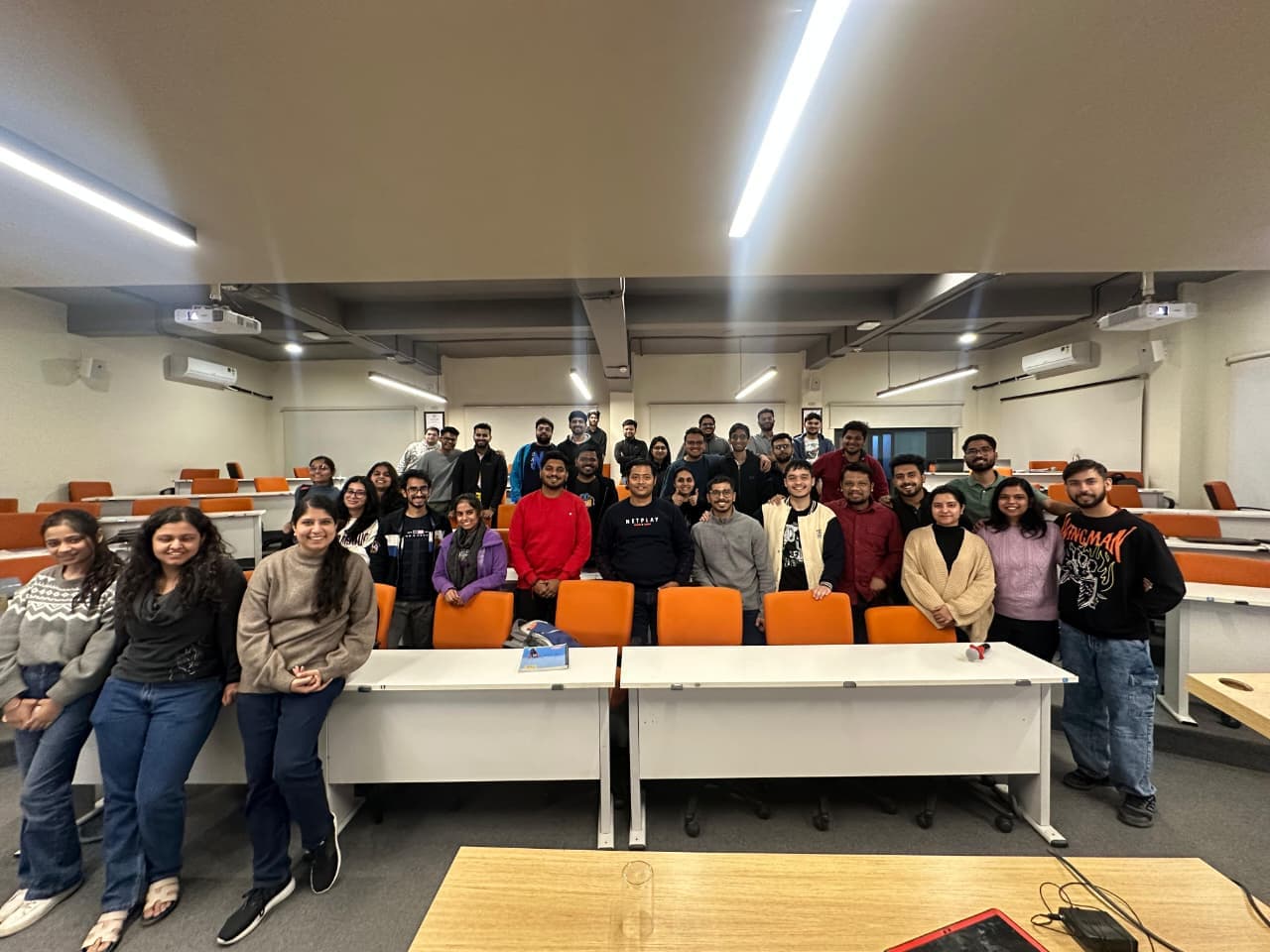
A PGDM classroom group at Great Lakes Institute of Management, Gurgaon
AI Initiatives

AI for students.

Not a rule against using AI — a guide to using it well. Four places it actually shows up in your PGDM life: case prep, placements, assignments and building. In each one, there's a real time-saving use and an easy way to quietly hollow out the point of the exercise. This page is about telling those apart.

See the four modulesSee the AI Mini Hackathon

Before you open the assistant

If you couldn't use AI for the next hour, would your answer actually change?

  1. 01

    Are you using it to save time on the part that was never the point, or to skip the part that was?

  2. 02

    Could you defend this out loud, right now, without looking at what the assistant gave you?

01 / Where this actually comes up

Four situations, one question each time.

In each situation: what's the real, defensible use — and what's the version that quietly hollows out the exercise?

01

Case prep and class participation

Do this

Use an assistant to get a fast first-pass framework or find a comparable case before class — it compresses the warm-up, not the thinking. Then interrogate what it gave you: what's assumed versus shown, what breaks the framework, what the case's actual numbers say that a generic template wouldn't know.

Not this

Walking into class with an AI-generated answer you haven't pressure-tested yourself. In a cold call, you defend your reasoning out loud — an assistant can't do that part for you, and it shows immediately when someone hasn't done the interrogation.

02

Placement prep, honestly

Do this

Use AI to mock a guesstimate or case interview, draft a first pass at CV bullet points, or rehearse an answer out loud against a simulated interviewer. It's a genuinely good practice partner precisely because it's tireless and available at 2 a.m. before a deadline.

Not this

Treating a rehearsed AI answer as the actual interview. A recruiter is testing your live reasoning under pressure, not your ability to recite something an assistant helped you prepare. See the full placement guidance for the rest of the process — this is only the AI-specific piece of it.

03

Research and assignments, without losing the point

Do this

Use AI to summarise a long reading fast, organise scattered notes, or restructure a messy first draft. That's real time saved on the parts of writing that were never the actual assignment.

Not this

Letting AI write the actual argument, or submitting a fact, statistic or citation you haven't personally verified. Know your programme's disclosure policy and follow it — an unverified AI citation in a submitted assignment is a preventable, embarrassing failure mode, not a shortcut.

04

Build something, don't just consume

Do this

The fastest way to actually understand what these tools can and can't do is to try building something with them — a small prototype, not a polished product. That's the entire premise of the AI Mini Hackathon.

Not this

Staying purely on the consumption side — using AI only to answer questions faster — without ever testing what happens when you try to make it do something new. The gap between using a tool and building with one is where the real learning is.

For the fuller placement process beyond the AI-specific piece above, see Placement Assistance.

02 / The rule that doesn't move

AI accelerates the draft. The judgment stays yours.

Every module above returns to the same line. An assistant can compress the time between a blank page and a first attempt at almost anything — a framework, a CV bullet, a summary, a prototype. What it cannot do is stand in for the judgment call a case, an interview or an assignment is actually testing. That's still entirely yours, every time.

03 / Before you submit anything

Three checks, every time.

  1. 1

    Disclosure: know your programme's actual policy on AI use in assignments and exams, and follow it — 'everyone does it' is not a defence.

  2. 2

    Verification: never submit a fact, number or citation an assistant gave you that you haven't personally checked against the source.

  3. 3

    Ownership: if you're asked to defend it, you need to be able to explain the reasoning — not the prompt that produced it.

More AI initiatives

Reading about it is step one. Building is step two.

Student build programme

AI Mini Hackathon

How an incoming PGDM cohort turned student problems into testable GenAI prototypes — plus Side Quests, a page of my own beta builds, open for testing.

See the hackathon