Problem structuring
Taking a large, ambiguous question and breaking it into pieces you can actually work with — before you start working with any single one of them.
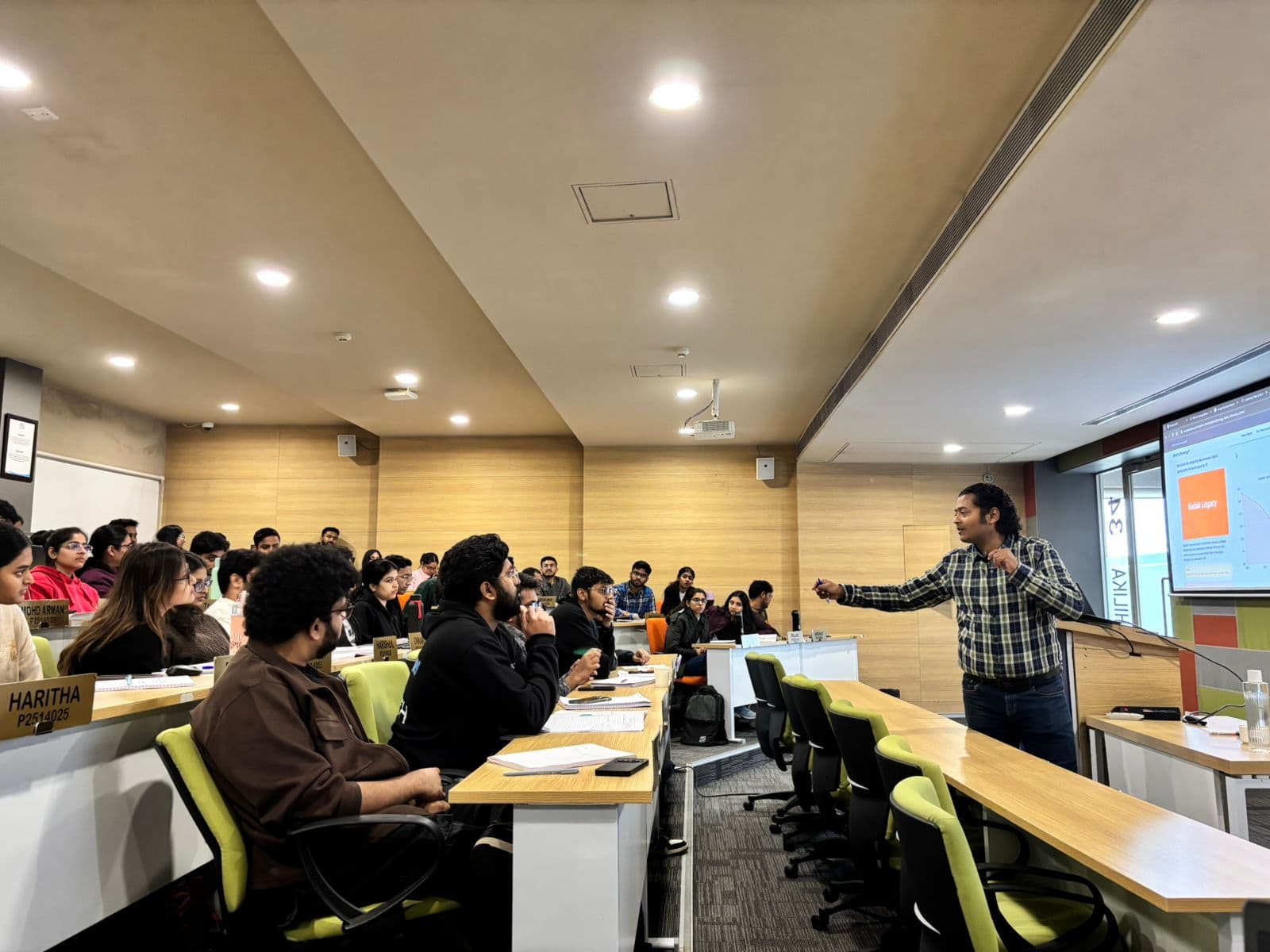
This is the long version of what I tell every student who walks into my office a few weeks before consulting or general-management placements begin — the process, the frameworks, the fit round, and the mistakes I watch good candidates make. Written out in full, in my own words, so it doesn’t have to wait for office hours.
Core loop
Listen → Structure → Solve → Land it
North star
Judgment, not a script
Before you memorise another framework
If I took away your framework right now, could you still ask a sharp first question?
Could you defend the one assumption in your structure that, if wrong, would break your whole recommendation?
Are you preparing to sound like a consultant, or preparing to actually think like one?
01 / The process, start to finish
Most of the anxiety I see isn’t about any single interview — it’s about not knowing what comes next. Every firm's process differs slightly, but the shape underneath is close enough to this everywhere I've seen it.
Stage 01
Firms read hundreds of near-identical resumes in a few days. What earns a second look is specific, quantified impact — not adjectives, and not a longer list of tools you've touched once.
Stage 02
Psychometric tests, logical or numerical reasoning, sometimes a short written case. Unglamorous, but a weak score here can end a process before a human ever reads your case performance.
Stage 03
Mentor or 'buddy' conversations, information sessions, pre-interview dinners. None of this formally decides anything on its own. All of it quietly shapes the impression that reaches the people who do decide.
Stage 04
Usually two conversations with senior consultants or managers — a case, a fit-style discussion, sometimes both blended into one. This is where structuring and composure get their first real test.
Stage 05
Case and fit again, but now with a partner or director in the room. The question quietly shifts from 'can this person structure a case' to 'would I trust this person in front of my client tomorrow.'
Stage 06
An offer, sometimes tied to a specific practice or role. If it doesn't come, ask for feedback anyway — it's the most useful data you'll get for the next process.
02 / Evaluation criteria
Firms phrase this differently in their own materials, but underneath, they’re almost always watching for the same four things.
Taking a large, ambiguous question and breaking it into pieces you can actually work with — before you start working with any single one of them.
Following that structure with real numbers and real logic. Confident language is not analysis; a number you can defend is.
Turning what you found into a point of view. A recommendation, not a recap of everywhere you looked along the way.
Saying it top-down — headline first — in a way a client could act on without asking you to explain it a second time.
A fifth, unofficial one
An old shorthand across the industry: would the interviewer be comfortable stuck at an airport with you during a long delay? It sounds informal, but it's really asking whether you're someone a client team could spend a stressful week with. Technical skill is replicable. Presence isn't, and interviewers know it.
03 / The case method, end to end
This is the sequence I return to with every student, regardless of which framework family the case belongs to. The framework changes case to case. This doesn’t.
Repeat the objective back in your own words before you do anything else. Ask two or three scoping questions that would genuinely change your structure — not a checklist recited to look thorough. Know when to stop asking and start structuring; camping here reads as stalling.
Build an issue tree that is mutually exclusive and collectively exhaustive for this case — not a memorised template glued on top of it. Say the structure out loud before you dive into any one branch, so the interviewer can redirect you before you spend ten minutes somewhere unproductive.
Ask for only the data you actually need next, not everything on offer. Do the arithmetic out loud, one step at a time. Sanity-check every number against something you already believe to be true — an order of magnitude, a benchmark, a gut check.
Lead with the recommendation, not a summary of everywhere you looked. Back it with the two or three points of evidence that actually carry it. Name the biggest risk to your own recommendation before the interviewer has to ask — it reads as judgment, not weakness.
04 / Framework families
A framework is a hypothesis about what usually matters in a certain kind of problem. It should shorten your first ninety seconds of thinking, not replace the next thirty minutes of it.
Answers
What changed in revenue, cost or mix — and since when?
Where candidates slip
Jumping straight to 'cut costs' before separating price, volume and cost drivers.
Answers
Is this market attractive, accessible and winnable for us specifically?
Where candidates slip
Sizing the market and stopping there, without asking whether this company can actually win it.
Answers
Where can value expand — organically or inorganically — and what has to be true?
Where candidates slip
Listing every possible growth lever instead of prioritising the two or three worth a recommendation.
Answers
What value does this create, what will customers actually pay, and how will rivals respond?
Where candidates slip
Anchoring only on cost-plus math and never asking about willingness to pay.
Answers
Does the deal create value, and can it actually be completed and integrated?
Where candidates slip
Valuing the target in isolation and forgetting integration risk entirely.
Answers
Where is the process losing time, quality or money — and what's the cheapest real fix?
Where candidates slip
Reaching for automation or headcount cuts as a reflex, before finding the actual bottleneck.
Answers
Can you build a defensible number from a standing start, with your assumptions visible?
Where candidates slip
Guessing a final number instead of showing the decomposition that produced it.
Answers
Can you create structure when no standard template fits the problem?
Where candidates slip
Forcing a memorised framework onto a problem it was never built to answer.
05 / The personal interview
Conventional wisdom says the case makes or breaks a candidate. In my experience watching this process closely, it’s the personal interview that actually separates similarly strong candidates — case technique is learnable in six weeks; presence and self-knowledge aren’t built that fast.
Not a resume recitation. A shaped narrative that gives the interviewer somewhere useful to go next — most will pick their first follow-up straight from what you choose to emphasise here.
Any number, any gap, any claim on it is fair game. A wobble explaining your own history costs more credibility than a shaky case ever will.
The STAR shape — Situation, Task, Action, Result — is the simplest way to tell a story under time pressure without losing the interviewer halfway through it.
A real weakness, with what you're actually doing about it, beats a disguised humble-brag every time. Interviewers have heard 'I'm too much of a perfectionist' more times than you have.
It has to be built from something specific about the firm or the role. If your answer could be handed to any firm in the market unchanged, it isn't ready yet.
Ask what you're genuinely curious about, not a question performed to look interested. Interviewers can tell the difference immediately.
06 / Group discussions
Not every process includes one, but general-management recruiting often does. The skill being tested here isn’t case technique — it’s whether you can move a group forward without dominating it.
A short business scenario, read fast, discussed in a group of six to eight. Offer a structure early if you can see one, then spend most of your airtime building on others' points rather than repeating your own opening line.
An open-ended or philosophical prompt. The goal isn't the cleverest interpretation — it's connecting an abstract idea to a real business decision quickly, and inviting quieter voices into the conversation.
Each participant holds a different clue to a shared puzzle. These formats reward listening and synthesis over talking — the person who quietly connects three other people's clues usually stands out more than the loudest one in the room.
07 / What actually goes wrong
I rarely see a candidate fail because they didn’t know a framework. I see the same handful of habits, over and over, across otherwise well-prepared candidates.
Reciting a memorised framework instead of building a structure for the case actually in front of them.
Treating clarifying questions as a checklist to get through, rather than genuinely trying to understand the problem.
Doing the arithmetic silently and presenting only a final number, so one small slip reads as a wrong instinct instead of a fixable error.
A synthesis that summarises every branch explored instead of committing to a recommendation.
Missing it when an interviewer is trying to help — a raised eyebrow, a repeated word, a gentle 'are you sure?' is data, not an attack.
Preparing exotic frameworks while under-preparing the fundamentals — mental math, structured communication, plain listening — that actually decide most interviews.
Walking into the fit round under-prepared because 'the case is what matters,' then losing the seat to someone with a similar case performance and a sharper sense of who they are.
08 / How I’d plan the weeks before
Quality beats volume every time I’ve watched this play out. A smaller number of well-reviewed mocks beats a large number of cases nobody reflected on afterward.
6–8 weeks out
Build a small case group — four to six people, ideally from different functional backgrounds. Work through one framework family at a time and don't move on until it's genuinely comfortable, not just familiar.
4–6 weeks out
Run complete mocks in pairs, swapping who interviews. Keep a short log after each one — one thing that worked, one thing to fix next time. The log, not the case count, is what actually compounds.
2–4 weeks out
Mix in personal-interview practice and, if your process includes one, group discussions. Cover a spread of industries so an unfamiliar sector doesn't rattle you on the day.
Final week
Taper the volume. Rest properly the day before. Walk in prepared to listen and think, not to perform a script you rehearsed forty times.
09 / The landscape, briefly
The highest bar on structured problem-solving and polish, typically the most case-heavy process of the group.
A similar method, often with more room for genuine domain interest and slightly more conversational cases.
A broader mix of strategy, technology and operations work; case style and depth vary more by practice area.
The same case-method habits still matter, but the fit round and functional depth carry relatively more weight.
None of this replaces practice