SSwapnil Sahoo
About
Research
  • Publications
  • Neurodiversity & Agency
  • Bricolage → Effectuation
  • Family Resourcefulness
  • Frugal Innovation
  • PhD Mandatory Coursework
    • How to Read a Research Paper
  • PhD Reach Out
Teaching
  • 1-Year MBA
  • 2-Year MBA
  • Karma Yoga
    • For B-Schools
    • For India · Mehalchauri
  • Business Simulation
  • AI Mini Hackathon
    • Side Quests · AI Viva Bot
  • Executive MDPs
Placement Assistance
  • Rigorous Industry Analysis
  • Case Study Preparation
  • Case Frameworks
  • Case Examples
  • Guesstimates
  • General Management Interviews
  • Product Management Interview Prep
  • Strategy & Entrepreneurship Interview Prep
  • Cracking Consulting Interviews
Entrepreneurship
  • How to Build a Startup?
    • Building a Durable Advantage
    • Raising Money Without Losing the Company
    • Finding Product-Market Fit
    • Hiring Your First Five People
    • Pitching and Storytelling
  • The Entrepreneurship Shelf
Press & Media
More
  • Gallery
  • Writing
  • Spirituality
    • Bhagavad Gita · Complete Text
    • Ramcharitmanas · Bālakāṇḍa
    • Authentic Hanuman Chalisa
    • Authentic Vishnu Sahasranama
    • Authentic Lalita Sahasranama
    • Authentic Shiva Tandava Stotram
    • Authentic Chandogya Upanishad
  • Holistic Wellbeing
    • Mental Wellbeing
  • Comics & Fiction
    • Spider-Man
    • Superman
    • He-Man
  • Mythology
    • Mahabharata (Original)
    • Ramayana (Original)
    • Immortals · 17 profiles
  • Contact

Profile

  • About
  • Press & Media
Research
  • Publications
  • Neurodiversity & Agency
  • Bricolage → Effectuation
  • Family Resourcefulness
  • Frugal Innovation
  • PhD Mandatory Coursework
    • How to Read a Research Paper
  • PhD Reach Out
Teaching
  • 1-Year MBA
  • 2-Year MBA
  • Karma Yoga
    • For B-Schools
    • For India · Mehalchauri
  • Business Simulation
  • AI Mini Hackathon
    • Side Quests · AI Viva Bot
  • Executive MDPs
Placements
  • Rigorous Industry Analysis
  • Case Study Preparation
  • Case Frameworks
  • Case Examples
  • Guesstimates
  • General Management Interviews
  • Product Management Interview Prep
  • Strategy & Entrepreneurship Interview Prep
  • Cracking Consulting Interviews
Entrepreneurship
  • How to Build a Startup?
    • Building a Durable Advantage
    • Raising Money Without Losing the Company
    • Finding Product-Market Fit
    • Hiring Your First Five People
    • Pitching and Storytelling
  • The Entrepreneurship Shelf
More
  • Gallery
  • Writing↗ (opens in a new tab)
  • Spirituality
    • Bhagavad Gita · Complete Text
    • Ramcharitmanas · Bālakāṇḍa
    • Authentic Hanuman Chalisa
    • Authentic Vishnu Sahasranama
    • Authentic Lalita Sahasranama
    • Authentic Shiva Tandava Stotram
    • Authentic Chandogya Upanishad
  • Holistic Wellbeing
    • Mental Wellbeing
  • Comics & Fiction
    • Spider-Man
    • Superman
    • He-Man
  • Mythology
    • Mahabharata (Original)
    • Ramayana (Original)
    • Immortals · 17 profiles
  • Contact

Dr. Swapnil Sahoo

Assistant Professor · Strategy · GLIM Gurgaon

Site

  • About
  • Research
  • Publications
  • PhD supervision

Elsewhere

(opens in a new tab) (opens in a new tab) (opens in a new tab) (opens in a new tab)

© 2026 Dr. Swapnil Sahoo. Except where a source or licence states otherwise.

Research, teaching and field notes.

Home/The Founder's Playbook/Hiring Your First Team
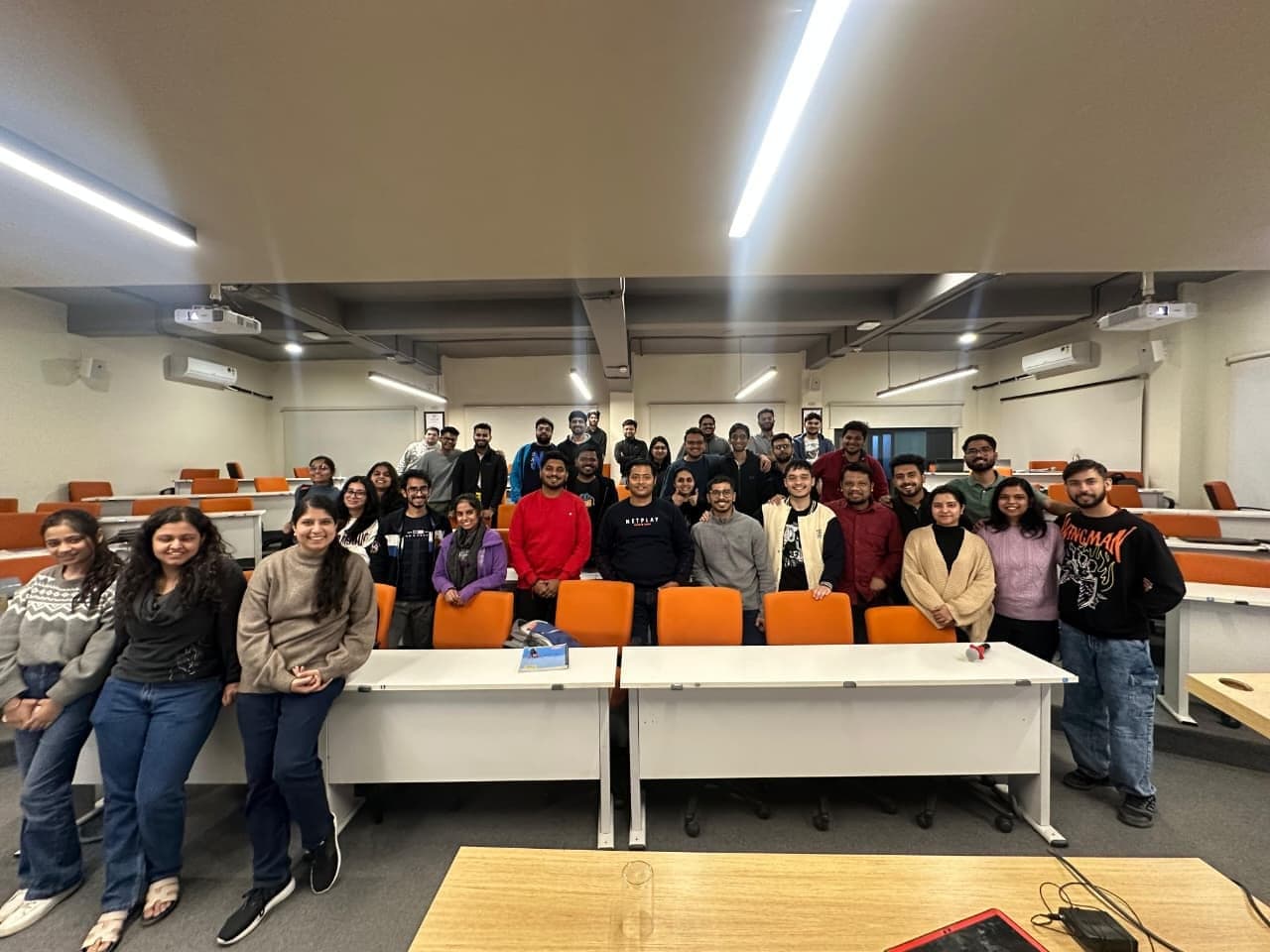
A classroom group at Great Lakes Gurgaon
The Founder's Playbook · Short course

Hiring your first five people.

Your first hires aren't filling roles — they're defining what the company becomes capable of before there's a process to fall back on. Get them right and you buy speed and judgment you couldn't otherwise afford. Get them wrong and every later hire inherits the problem.

Download the slide deck (PowerPoint file)Read the modules

Before the first offer letter

A great resume tells you what someone has done. It rarely tells you what they'll do when nothing is defined yet.

  1. 01

    If this person disagreed with your plan on their first day, would they actually say so?

  2. 02

    What specific, checkable thing has this person built, shipped or fixed?

Module 01 / What actually matters early

Four traits that beat a strong resume.

None of these show up clearly on a CV. All four take a real conversation, and sometimes a reference call, to actually see.

01

Comfort doing work outside their job title

In the first five hires, there is no org chart thick enough to protect anyone from ambiguity. The person who says "that's not my job" in month two is expensive far beyond their salary.

✕

Someone who asks for a detailed job description before they'll consider joining a five-person company.

02

A track record you can actually verify

Enthusiasm in an interview is cheap. A specific, checkable thing they built, shipped or fixed — that you can call a reference about — tells you far more than how well they answer questions.

✕

Impressive-sounding claims that get vaguer, not more specific, the more you ask about them.

03

They ask what they'd own, not just what they'd be paid

Early hires who think in terms of a problem they'll be responsible for tend to stay engaged when things get hard. Early hires who think only in terms of compensation tend to leave the moment a better offer appears.

✕

Every question in the interview is about salary, title or equity, with none about the actual problem.

04

Willingness to disagree with you, respectfully, in the interview itself

If someone won't push back when they're trying to impress you, they certainly won't push back once they're on payroll — and you need people who will tell you when your plan is wrong.

✕

Agreement with everything you say, including things a thoughtful outsider would reasonably question.

Module 02 / A simple approach to early equity

Four rules that prevent most future disputes.

  1. 1

    Vest everyone's equity over time (commonly four years, with a one-year cliff) — nobody, including you, should own a large stake for a role they leave after two months.

  2. 2

    Give early hires less equity than co-founders, but be specific with each person about why, so it doesn't feel arbitrary later.

  3. 3

    Write down verbally agreed equity in a document immediately — a handshake percentage remembered differently by two people is a guaranteed future conflict.

  4. 4

    Revisit the plan honestly if someone's contribution turns out to be much larger or smaller than expected — silence about this breeds resentment faster than an honest, awkward conversation.

Read alongside Raising Money Without Losing the Company — early equity decisions and future dilution rounds affect the same cap table.

Module 03 / Co-founder mistakes

The conversations avoided early cost the most later.

  • Splitting equity equally by default, without discussing what each person is actually contributing or risking.

  • Avoiding the vesting conversation because it feels like distrust between friends — it isn't; it protects everyone equally.

  • Never writing down who decides what when the two of you disagree, until the day you actually disagree.

  • Hiring a friend or relative for a critical early role because it's comfortable, not because they're the strongest option available.

Continue the playbook

Keep building.

The Founder's Playbook

How to Build a Startup?

Short course

Finding Product-Market Fit