SSwapnil Sahoo
About
Research
  • Publications
  • Neurodiversity & Agency
  • Bricolage → Effectuation
  • Family Resourcefulness
  • Frugal Innovation
  • PhD Mandatory Coursework
    • How to Read a Research Paper
  • PhD Reach Out
Teaching
  • 1-Year MBA
  • 2-Year MBA
  • Karma Yoga
    • For B-Schools
    • For India · Mehalchauri
  • Business Simulation
  • AI Mini Hackathon
    • Side Quests · AI Viva Bot
  • Executive MDPs
Placement Assistance
  • Rigorous Industry Analysis
  • Case Study Preparation
  • Case Frameworks
  • Case Examples
  • Guesstimates
  • General Management Interviews
  • Product Management Interview Prep
  • Strategy & Entrepreneurship Interview Prep
  • Cracking Consulting Interviews
Entrepreneurship
  • How to Build a Startup?
    • Building a Durable Advantage
    • Raising Money Without Losing the Company
    • Finding Product-Market Fit
    • Hiring Your First Five People
    • Pitching and Storytelling
  • The Entrepreneurship Shelf
Press & Media
More
  • Gallery
  • Writing
  • Spirituality
    • Bhagavad Gita · Complete Text
    • Ramcharitmanas · Bālakāṇḍa
    • Authentic Hanuman Chalisa
    • Authentic Vishnu Sahasranama
    • Authentic Lalita Sahasranama
    • Authentic Shiva Tandava Stotram
    • Authentic Chandogya Upanishad
  • Holistic Wellbeing
    • Mental Wellbeing
  • Comics & Fiction
    • Spider-Man
    • Superman
    • He-Man
  • Mythology
    • Mahabharata (Original)
    • Ramayana (Original)
    • Immortals · 17 profiles
  • Contact

Profile

  • About
  • Press & Media
Research
  • Publications
  • Neurodiversity & Agency
  • Bricolage → Effectuation
  • Family Resourcefulness
  • Frugal Innovation
  • PhD Mandatory Coursework
    • How to Read a Research Paper
  • PhD Reach Out
Teaching
  • 1-Year MBA
  • 2-Year MBA
  • Karma Yoga
    • For B-Schools
    • For India · Mehalchauri
  • Business Simulation
  • AI Mini Hackathon
    • Side Quests · AI Viva Bot
  • Executive MDPs
Placements
  • Rigorous Industry Analysis
  • Case Study Preparation
  • Case Frameworks
  • Case Examples
  • Guesstimates
  • General Management Interviews
  • Product Management Interview Prep
  • Strategy & Entrepreneurship Interview Prep
  • Cracking Consulting Interviews
Entrepreneurship
  • How to Build a Startup?
    • Building a Durable Advantage
    • Raising Money Without Losing the Company
    • Finding Product-Market Fit
    • Hiring Your First Five People
    • Pitching and Storytelling
  • The Entrepreneurship Shelf
More
  • Gallery
  • Writing↗ (opens in a new tab)
  • Spirituality
    • Bhagavad Gita · Complete Text
    • Ramcharitmanas · Bālakāṇḍa
    • Authentic Hanuman Chalisa
    • Authentic Vishnu Sahasranama
    • Authentic Lalita Sahasranama
    • Authentic Shiva Tandava Stotram
    • Authentic Chandogya Upanishad
  • Holistic Wellbeing
    • Mental Wellbeing
  • Comics & Fiction
    • Spider-Man
    • Superman
    • He-Man
  • Mythology
    • Mahabharata (Original)
    • Ramayana (Original)
    • Immortals · 17 profiles
  • Contact

Dr. Swapnil Sahoo

Assistant Professor · Strategy · GLIM Gurgaon

Site

  • About
  • Research
  • Publications
  • PhD supervision

Elsewhere

(opens in a new tab) (opens in a new tab) (opens in a new tab) (opens in a new tab)

© 2026 Dr. Swapnil Sahoo. Except where a source or licence states otherwise.

Research, teaching and field notes.

Home/The Founder's Playbook/Building a Durable Advantage
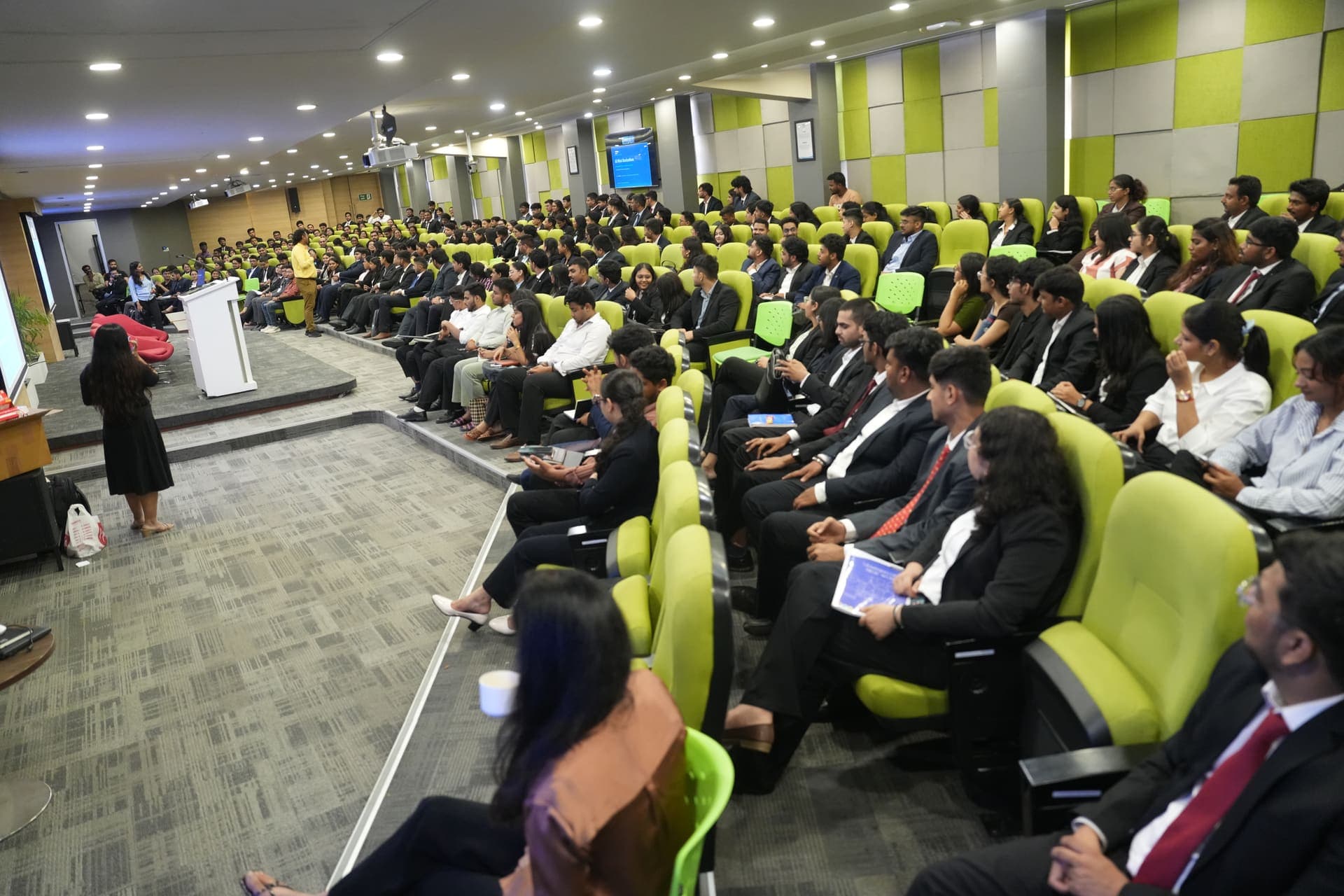
Dr Swapnil Sahoo speaking to a full auditorium during a PGDM induction session
The Founder's Playbook · Short course

Building a durable advantage.

Winning once is easy — a good product, a bit of timing luck, a clever launch. None of that explains why a competitor with more money and the same idea can't just copy you next year. This short course is about the difference: what actually makes an advantage hold up once everyone can see it worked.

Download the slide deck (PowerPoint file)Read the five modules

Before module one

An advantage that isn't getting stronger is usually getting weaker.

  1. 01

    If you deleted your product's marketing entirely, would customers still have a reason they couldn't easily get elsewhere?

  2. 02

    Which of the four sources below applies to your idea — and is it getting stronger or weaker each month?

Module 01 / Why most advantages fade

Winning once is the easy part.

A good product, a clever launch, a bit of timing luck — these can win you a first customer, a first year, even a first funding round. None of them, by themselves, explain why a competitor with more money and the same idea can't simply copy you next year.

The real question isn't “can this work?” It's “can this still be true in three years, once everyone can see that it worked?” Most founders skip this question because it's uncomfortable. It's the one worth sitting with the longest.

Module 02 / Four sources of a real advantage

If it isn't one of these four, it probably isn't durable.

01

A cost or efficiency advantage

You can do the same thing for meaningfully less than a rival — through scale, a proprietary process, or access to an input others don't have. This is durable when a competitor would need years, not months, to close the gap.

What this looks like

A telecom operator that built its own fibre network end to end can price below rivals for years and still turn a profit, because its underlying cost structure is genuinely lower, not just discounted.

02

Differentiation customers will actually pay for

Not different for its own sake — different in a way a customer notices, values and would pay a premium to keep, even once a copy shows up. The test is willingness to pay, not novelty.

What this looks like

A D2C skincare brand whose specific formulation customers ask for by name, not just "a moisturiser" — the difference lives in the product, not the packaging.

03

Switching costs that make leaving expensive

Data, workflow, integrations or relationships built up over time that a customer would have to painfully rebuild elsewhere. The advantage grows every month the customer stays, not just at the moment they sign up.

What this looks like

A small business's accounting software after five years — every invoice, vendor record and report lives inside it. Switching means re-entering years of history, not just learning a new interface.

04

Network effects

The product becomes more valuable to each user as more people join. This means a well-funded late entrant starts from zero every time, no matter how much they spend on launch.

What this looks like

A ride-hailing app is more useful in a city with more drivers, which makes it more attractive to riders, which attracts more drivers — a loop a new entrant has to bootstrap from scratch, city by city.

Module 03 / The twelve-month copy test

Would a well-funded rival rebuild this within a year?

Ask it honestly, about your own idea. If the answer is yes, what you have is a head start, not an advantage — useful, but temporary. Plan around that. If the answer is genuinely no, ask which of the four sources above is doing the protecting, and whether it's getting stronger or weaker as you grow.

Module 04 / The big-market trap

Big and contested beats small and defensible — until it doesn't.

A huge, exciting market sounds like the safer bet for a new idea. It usually isn't. In a big market, well-resourced players are already fighting for the same customers — you're competing on their terms from day one, with none of the four sources of advantage yet in place.

A smaller, more specific starting segment lets you build real depth — the kind that eventually becomes one of those four sources — before you ever face that fight. The market can grow later. The advantage has to be built first, somewhere narrow enough that you can actually win it outright.

Module 05 / Your turn

A one-page map of your own advantage.

  1. 1

    Write your idea in one sentence: for [specific customer], we are better because [specific reason].

  2. 2

    For each of the four sources, write one honest sentence on whether it applies to you, even partially.

  3. 3

    Circle the strongest source today — that's the one worth investing in deliberately.

  4. 4

    Run the twelve-month copy test on it, out loud, with a partner who will push back.

Continue the playbook

Keep building.

The Founder's Playbook

How to Build a Startup?

Structure

Case Frameworks