Dignity before solution
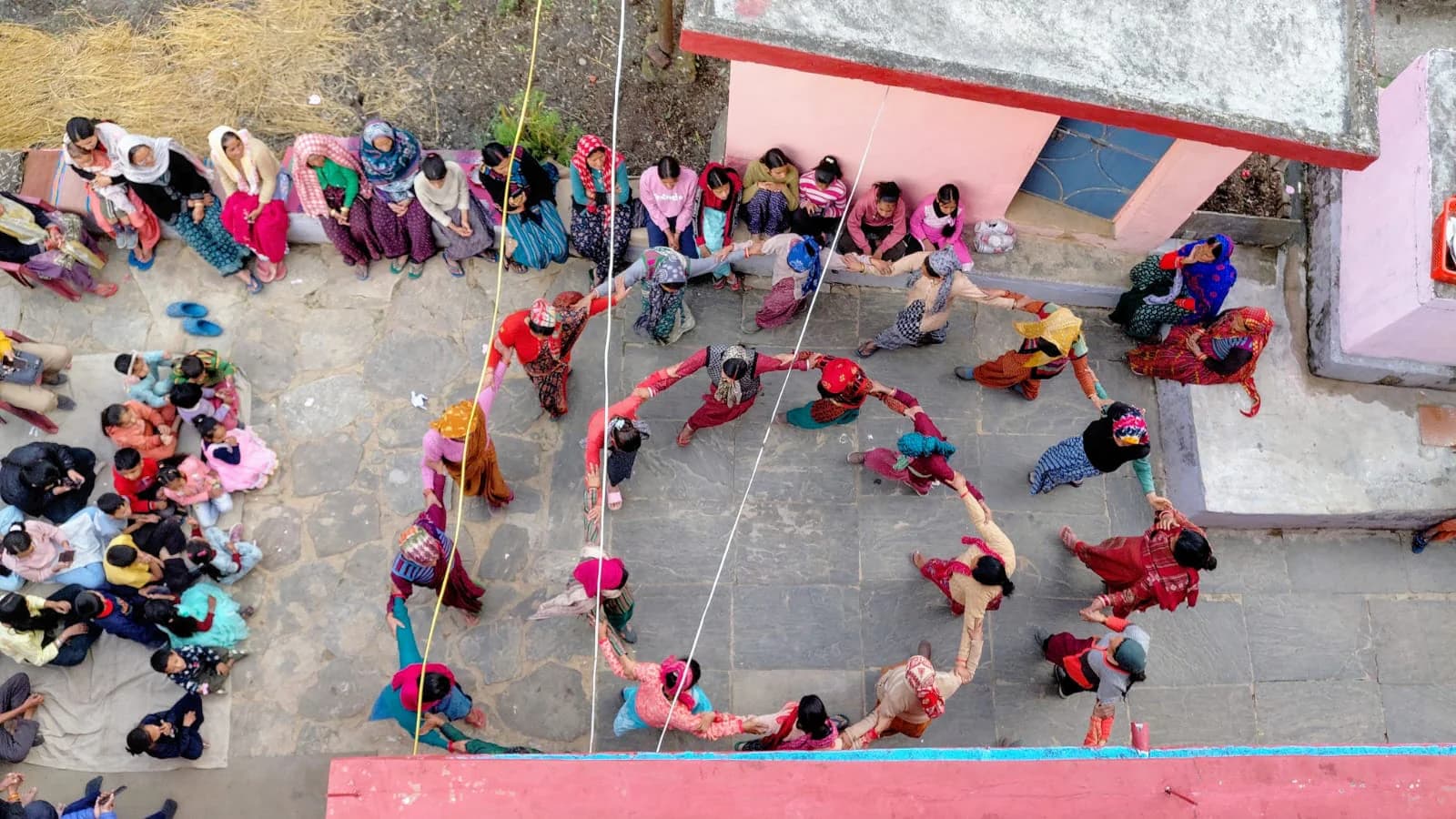
Community members are partners with agency and knowledge. Listening, informed consent and local priorities come before the team’s preferred idea.[1][2]
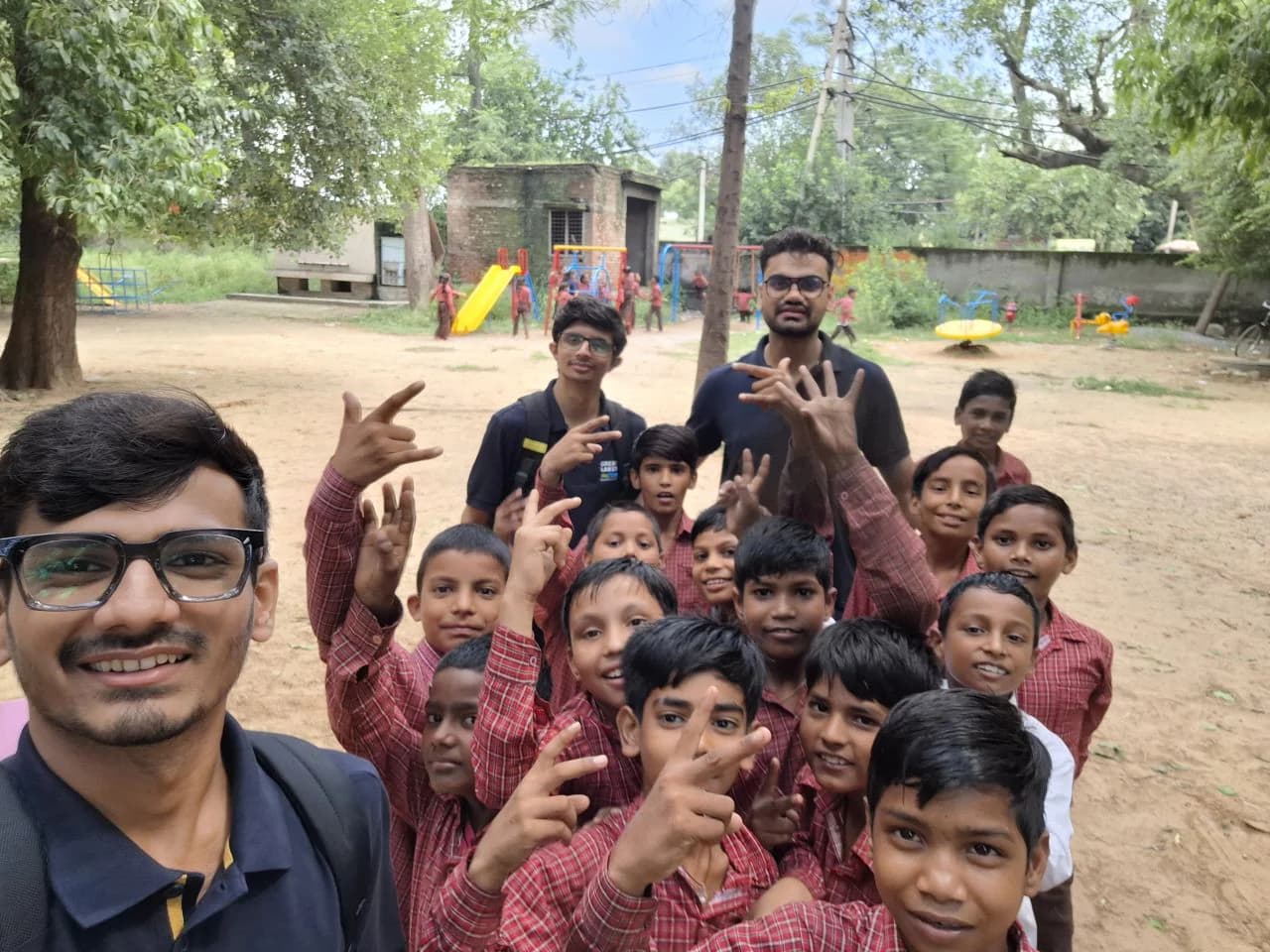
A community field lab where self-managed teams listen before acting, frame consequential problems with stakeholders, build feasible interventions, measure what changed and reflect on the responsibility of managerial action.
01 / Learning promise
Karma Yoga treats the field as a serious management laboratory. Learners move from empathy to diagnosis, from co-design to disciplined execution, and from visible activity to defensible evidence of value.
Community members are partners with agency and knowledge. Listening, informed consent and local priorities come before the team’s preferred idea.[1][2]
Teams distinguish outputs from outcomes and pair stories with baseline signals, observation, participation data and stakeholder feedback.[2][3][4]
A responsible intervention must be safe, maintainable and locally owned after the student team leaves the field.[1][3][4]
02 / Field learning loop
The journey is deliberately iterative. Evidence from every visit can reopen the problem frame, alter the intervention or stop a solution that is unsafe, unwanted or unsustainable.
Prepare
Understand purpose, partners, roles, safeguarding and the field covenant.
Discover
Observe assets and constraints; hear stakeholder priorities without prescribing.
Diagnose
Convert observations into a precise, evidence-backed problem worth solving.
Create
Generate alternatives with users and select against need, feasibility and dignity.
Prototype
Make the smallest safe version that can reveal what the team still does not know.
Act
Coordinate people, resources and partner expectations through self-managed teams.
Assure
Compare baseline and endline signals; invite feedback and document limitations.
Transfer
Handover ownership, defend the evidence and translate field learning into leadership.
03 / Learning outcomes
Demonstrate stakeholder empathy by listening, observing and reframing a societal challenge with—not for—the people affected.
Apply structured problem solving to generate, compare and adapt feasible interventions under real resource constraints.
Lead a self-managed team through role clarity, ethical decisions, partner coordination, execution and course correction.
Evaluate outputs, outcomes and limitations using multiple forms of evidence, then communicate a responsible learning narrative.
04 / Complete learning journey
Open any stage to inspect its question, coverage, learning activity and evidence of completion.
Prepare · Orientation
Topics & lenses
Learning in action
Evidence / artifact
Signed team charter, role map and ethical field protocol.
Discover · First field visit
Topics & lenses
Learning in action
Evidence / artifact
Field note, asset map, stakeholder map and provisional baseline.
Diagnose · Problem framing
Driving question
Which problem is consequential, evidenced and within the team’s responsible reach?[2]
Topics & lenses
Learning in action
Evidence / artifact
Approved problem frame with evidence, assumptions and success criteria.
Create · Project approval
Driving question
Which option best balances user voice, impact, feasibility, safety and continuity?[1][2]
Topics & lenses
Learning in action
Evidence / artifact
Project canvas, option matrix, risk register and partner-approved action plan.
Prototype · Frugal Play Lab
Driving question
Can a low-cost learning aid be useful, joyful, safe, repairable and dignified?[5][6]
Topics & lenses
Learning in action
Evidence / artifact
Working prototype, build guide, cost sheet, safety gate and ethical implementation plan.
Act · Field implementation
Topics & lenses
Learning in action
Evidence / artifact
Implementation log, resource record and consent-compliant evidence pack.
Assure · Impact and continuity
Topics & lenses
Learning in action
Evidence / artifact
Impact dashboard, limitations note and signed handover/continuity plan.
Transfer · Reflection
Driving question
How did the experience change the team’s judgment, behaviour and view of impact?[2]
Topics & lenses
Learning in action
Evidence / artifact
Final evidence deck, partner feedback, peer review and individual reflection log.
05 / Practice studios
Each studio makes judgment observable through a concrete action and a reviewable piece of evidence.
Teams practice observation, stakeholder interviews and asset mapping before any intervention is approved.
Evidence · Field note + validated problem frame
A low-cost inclusive toy challenge makes safety, dignity, unit economics and repairability visible design constraints.
Evidence · Prototype + safety gate + build guide
Self-managed teams coordinate partners, resources and changing conditions while maintaining a decision trail.
Evidence · Implementation log + partner check-in
Teams triangulate results, surface limitations and transfer ownership rather than treating the final visit as an exit.
Evidence · Impact dashboard + continuity plan
06 / Evidence of learning
Multiple signals value preparation, action, reflection and demonstrated transfer—not performance on a single instrument.
10%
Depth of listening, stakeholder insight, evidence quality and precision of the approved problem frame.
Method · Field note + problem brief
10%
Range and originality of alternatives, fit with user need and intelligent use of constraints.
Method · Option set + prototype
10%
Role clarity, feasibility, risk management, measurement logic and partner-approved implementation plan.
Method · Project canvas + risk register
70%
Quality and ethics of delivery, adaptability, teamwork, field evidence, partner feedback, handover and reflective learning.
Method · Evidence bundle + presentation
07 / Safeguards & integrity
Clear boundaries protect people, learning quality and the legitimacy of the evidence produced.
No learner testing, personal data, photography or identifiable storytelling without appropriate permission and faculty/partner safeguards.[5]
Any toy, device or physical activity must pass a documented risk review; unsafe prototypes do not proceed to community testing.[6]
Collect only evidence needed for learning and impact review; protect identities and separate observation from interpretation.
Name contributions accurately, report limits and unintended effects, and never turn community engagement into performative content.[2]
AI may support synthesis and ideation, but it cannot replace field listening, fabricate evidence or author an unexamined reflection.[2]
Every intervention must identify who can operate, maintain, repair or discontinue it after the team’s final visit.[1]
08 / References