SSwapnil Sahoo
AboutResearchPublications
  • 1-Year MBA
  • 2-Year MBA
  • Karma Yoga
    • For B-Schools
    • For India · Mehalchauri
  • Business Simulation
  • Case Study Preparation
  • AI Mini Hackathon
  • Placements
  • Executive MDPs
PhDWriting
  • Press & Media
  • Gallery
  • Spirituality
    • Authentic Hanuman Chalisa
    • Authentic Vishnu Sahasranama
    • Authentic Lalita Sahasranama
    • Authentic Shiva Tandava Stotram
  • Comics & Fiction
    • Spider-Man
    • Superman
    • He-Man
  • Mythology
    • Mahabharata (Original)
    • Ramayana (Original)
  • Contact

Profile

  • About
  • Research
  • Publications
  • PhD
  • Writing↗ (opens in a new tab)

Teaching

  • 1-Year MBA
  • 2-Year MBA
  • Karma Yoga
    • For B-Schools
    • For India · Mehalchauri
  • Business Simulation
  • Case Study Preparation
  • AI Mini Hackathon
  • Placements
  • Executive MDPs

More

  • Press & Media
  • Gallery
  • Spirituality
    • Authentic Hanuman Chalisa
    • Authentic Vishnu Sahasranama
    • Authentic Lalita Sahasranama
    • Authentic Shiva Tandava Stotram
  • Comics & Fiction
    • Spider-Man
    • Superman
    • He-Man
  • Mythology
    • Mahabharata (Original)
    • Ramayana (Original)
  • Contact

Dr. Swapnil Sahoo

Assistant Professor · Strategy · GLIM Gurgaon

Site

  • About
  • Research
  • Publications
  • PhD supervision

Elsewhere

(opens in a new tab) (opens in a new tab) (opens in a new tab) (opens in a new tab)

© 2026 Dr. Swapnil Sahoo. Except where a source or licence states otherwise.

Research, teaching and field notes.

Experiential leadership · B-school field pedagogy

Karma Yoga for B-Schoolsservice becomes a rigorous management laboratory.

A field-learning architecture for management education, where student teams listen, frame, co-design, deliver, measure, hand over and reflect with community partners.

See field practiceExplore the learning loop
Programme
Karma Yoga
Pathway
For B-Schools
Learning mode
Field immersion · Community co-design
Faculty
Prof. S. K. Palhan · Dr. Swapnil Sahoo
Karma Yoga hub/For B-SchoolsFor India · Mehalchauri

Course map

PromiseLearning loopOutcomesSessionsPracticeAssessmentIntegrityReferences

Questions before answers

Before serving, question the meaning of help.

Karma Yoga asks learners to enter the field with humility and managerial discipline. These questions surface voice, power, causality and continuity before a team mistakes visible activity for responsible impact.

Socratic lens

Test the assumption.

Ask what is being taken for granted, whose evidence matters, what a counterexample would show and who lives with the consequence.

  1. 01

    Who defined the problem as a problem, whose knowledge is missing from that definition and how could the community refuse or reshape the proposed intervention?

  2. 02

    When students call an action “help,” what evidence shows that it preserves dignity, responds to a local priority and does not transfer hidden costs to the partner?

  3. 03

    If participation rises or a story sounds moving, what rival explanations should be considered before attributing meaningful change to the intervention?

  4. 04

    Who owns, maintains, repairs or stops the intervention after the team leaves—and what does that answer reveal about power and genuine partnership?

First-principles lens

Find what must be true.

Strip the subject back to its purpose, evidence, mechanism and constraints before rebuilding the argument.

  1. 01

    What human capability, agency or condition should improve, for whom, and what boundary keeps the team within its responsible reach?

  2. 02

    Through what concrete mechanism should the intervention produce change, and which baseline, observation and stakeholder evidence could test that mechanism?

  3. 03

    Which constraints—safety, consent, time, trust, materials, skill and local capacity—must shape the design before activity begins?

  4. 04

    What is the smallest safe and useful action the community can help test, and what must be true for its value to continue without the student team?

Pathway 01 · Field pedagogy

Karma Yoga for B-Schools

Designed for management education, this pathway turns community engagement into a rigorous field laboratory. Student teams move from listening and problem framing to co-design, delivery, measurement, handover and reflection.

“The classroom travels to the community—and returns with better questions.”

Field-learning principle
01

Field before framework

Learners encounter people, place and constraint before deciding which managerial lens is useful.
02

Service as practice

Teams plan, coordinate, adapt and take responsibility for work whose consequences are real.

03

Evidence after action

Outputs, outcomes, partner feedback, limits and handover matter more than a polished activity story.
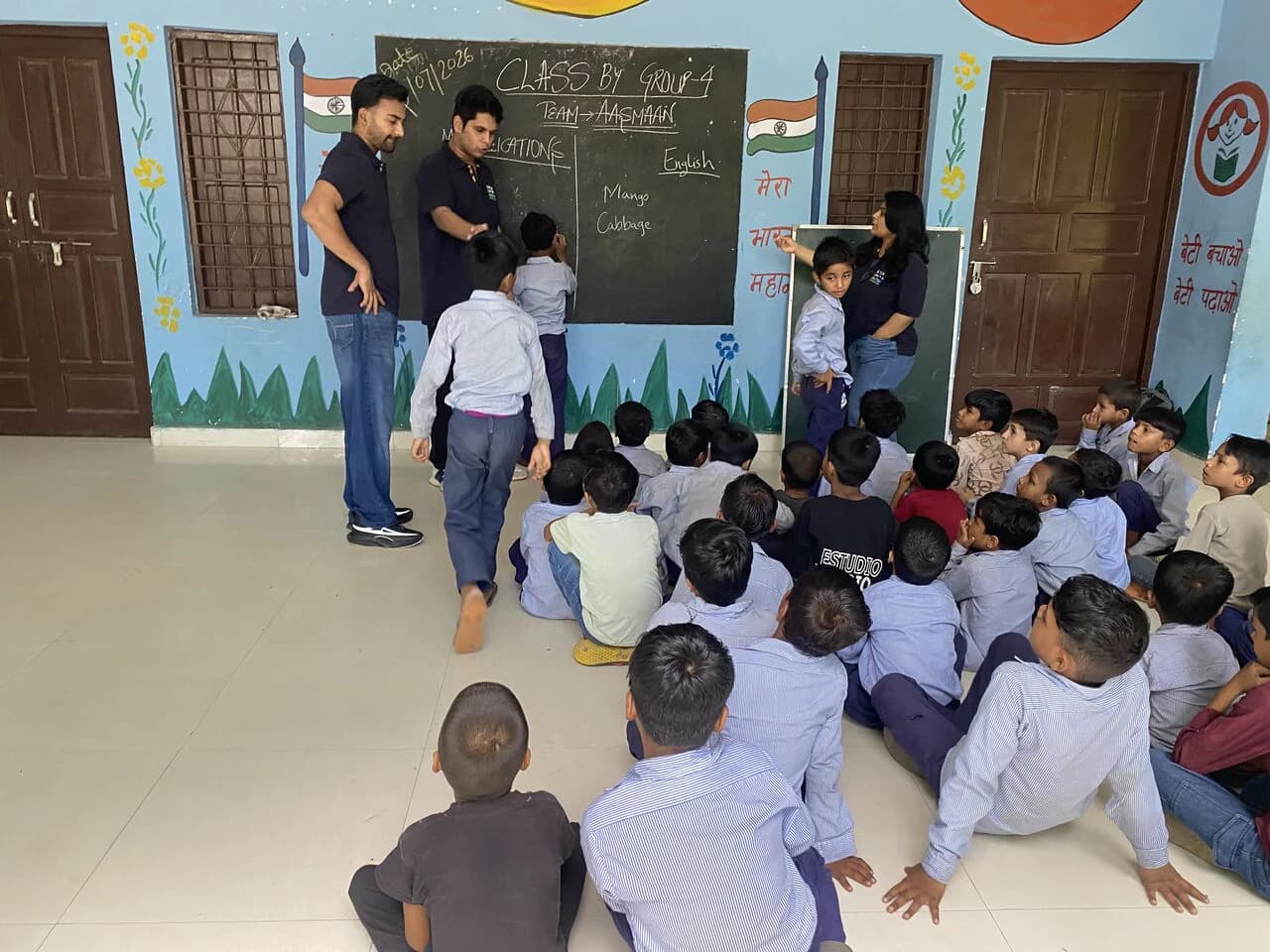
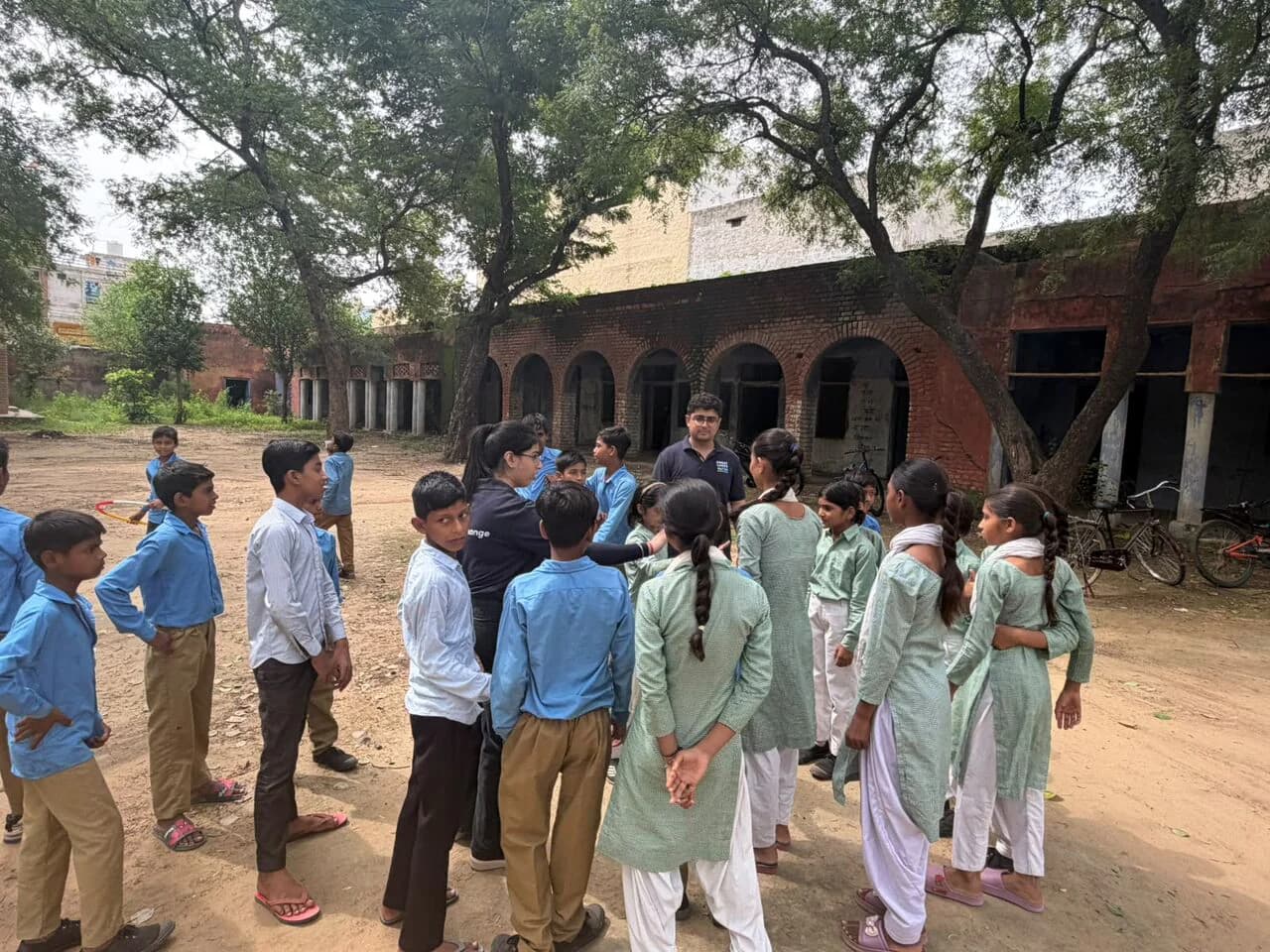
Management students leading a participatory classroom lesson with schoolchildren
Learning in the classroom · student teams turn preparation into participatory teaching.
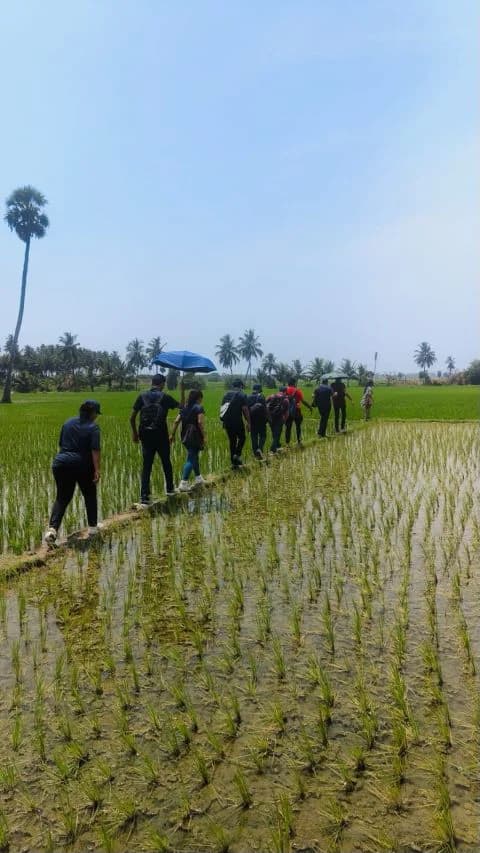
Management students walking along a narrow path through cultivated rice fields
Walking the field · immersion makes context and constraint impossible to abstract away.
Management students listening to schoolchildren in a shaded village courtyard
Listening before designing · learners begin with conversations, not prescriptions.
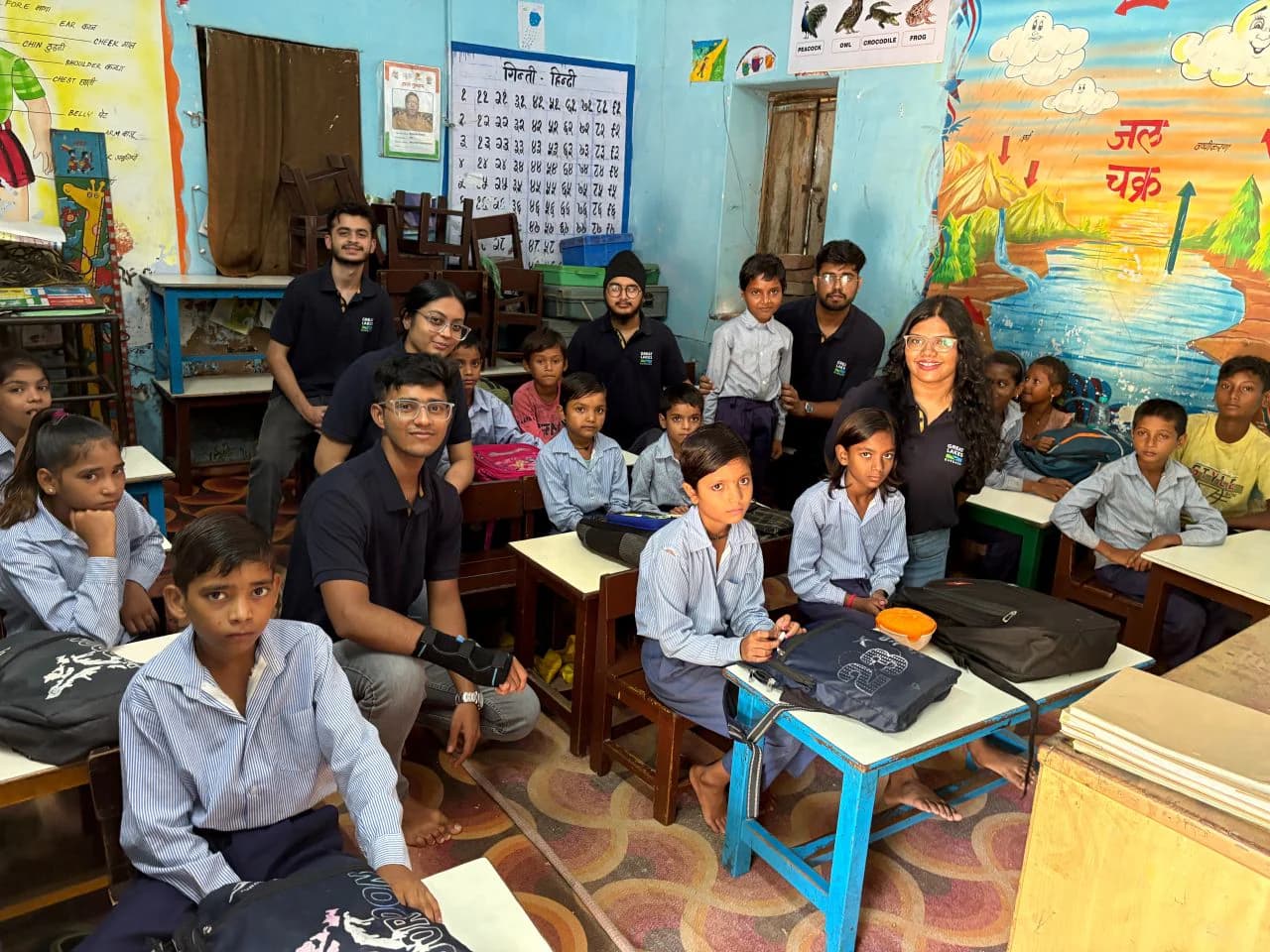
Management students and schoolchildren gathered together inside a classroom
Inside the learning community · proximity changes how a managerial problem is framed.
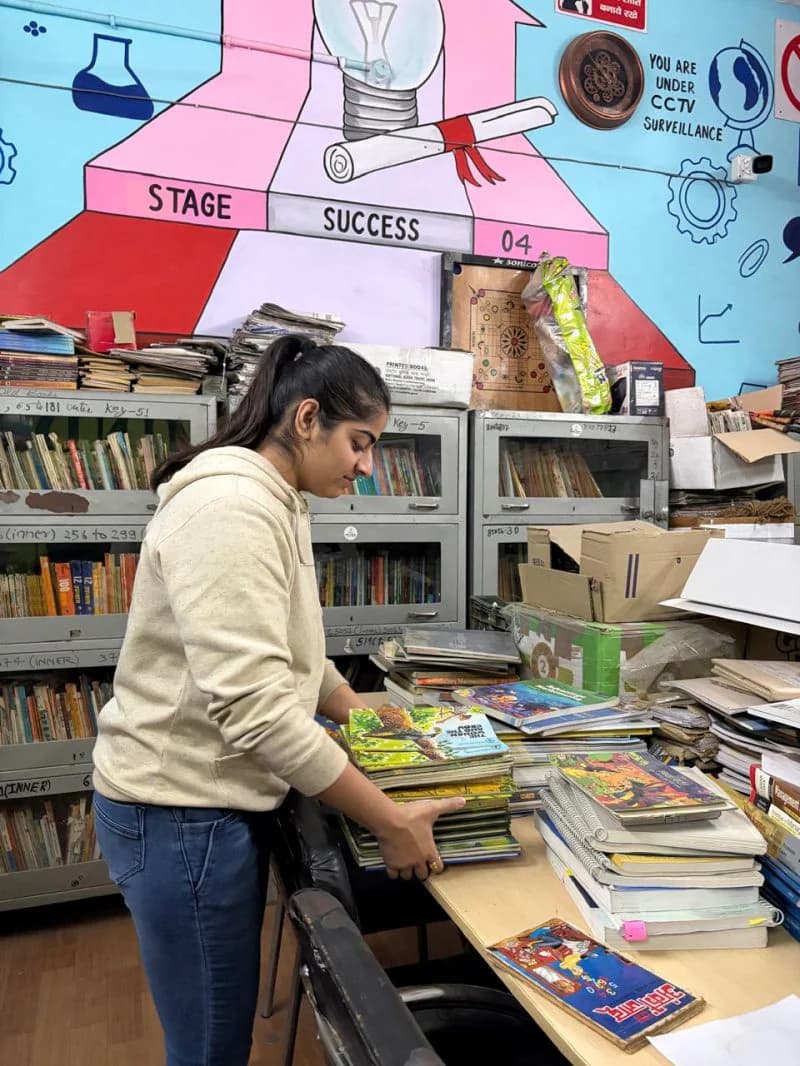
A management student sorting children's books in a school library
Preparing the library · service also means the quiet work of organising shared resources.
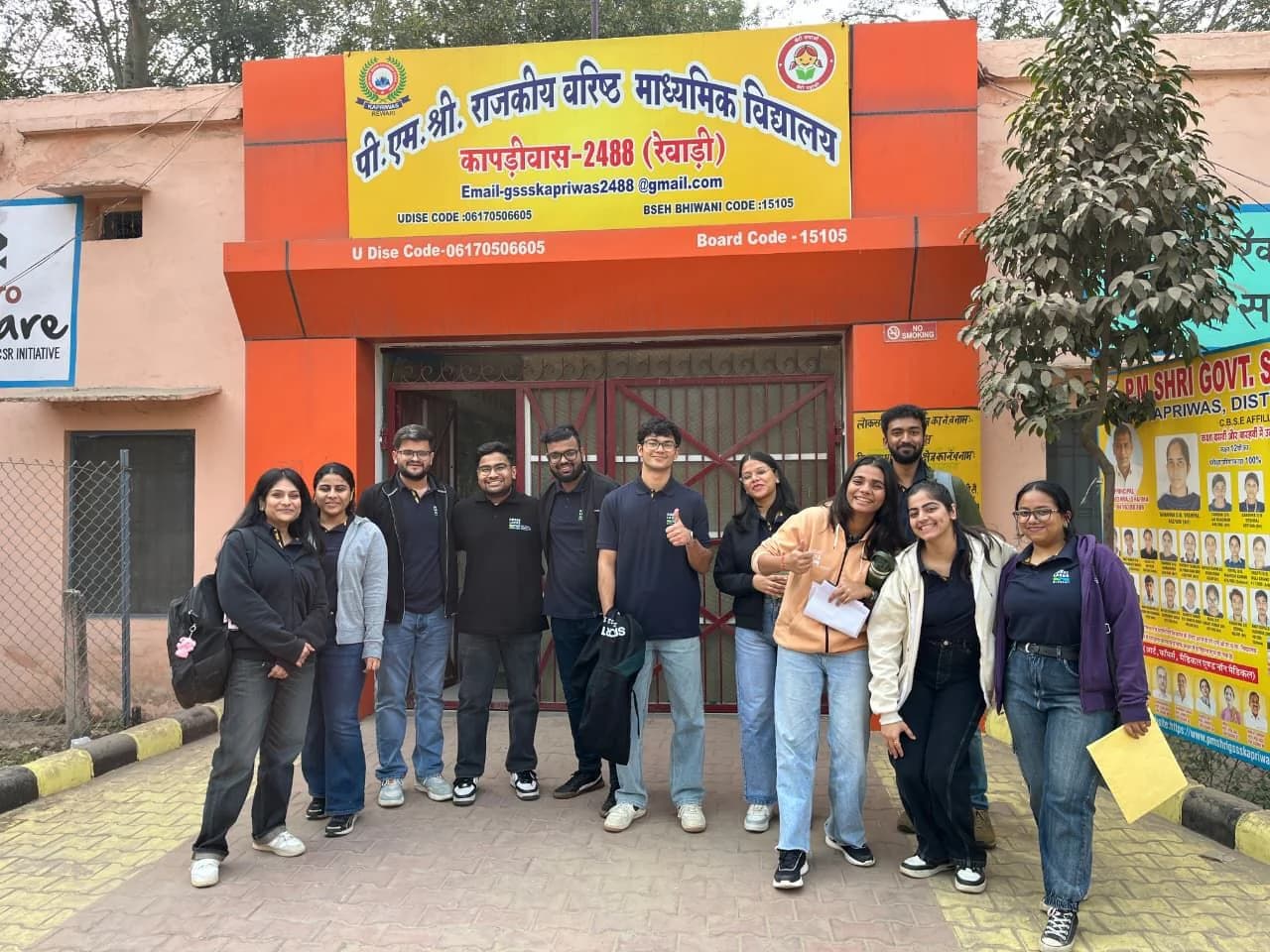
A management student field team standing together outside a government school
A team in the field · planning, role clarity and collective accountability travel together.
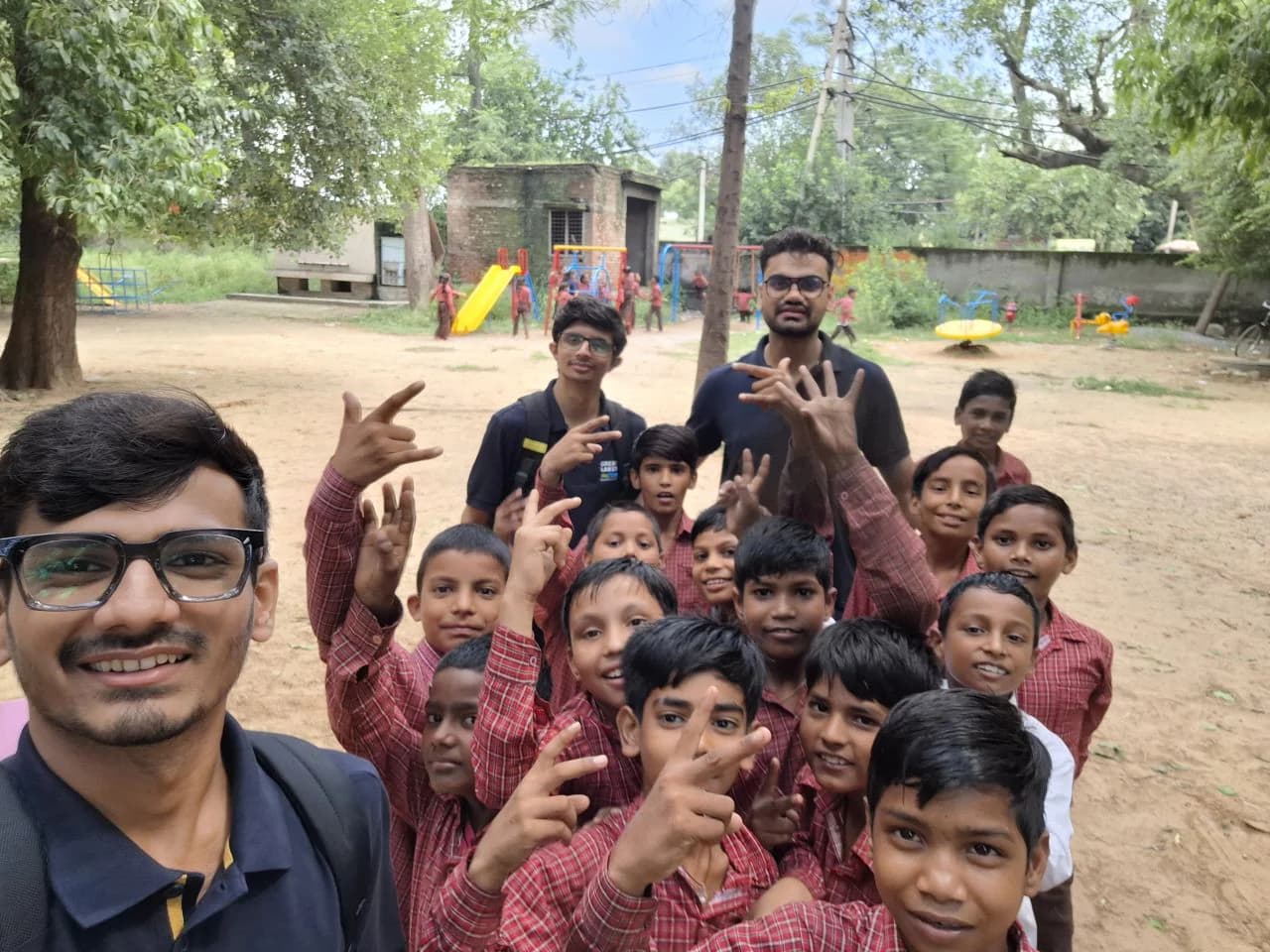
Management students taking a cheerful group photograph with schoolchildren outdoors
Connection before intervention · trust is built in the moments between formal activities.
Explore the complete B-school learning architecture

01 / Learning promise

Learn to lead with communities—not merely for them.

Karma Yoga treats the field as a serious management laboratory. Learners move from empathy to diagnosis, from co-design to disciplined execution, and from visible activity to defensible evidence of value.

01

Dignity before solution

Community members are partners with agency and knowledge. Listening, informed consent and local priorities come before the team’s preferred idea.[1][2]

02

Evidence before narrative

Teams distinguish outputs from outcomes and pair stories with baseline signals, observation, participation data and stakeholder feedback.[2][3][4]

03

Handover before exit

A responsible intervention must be safe, maintainable and locally owned after the student team leaves the field.[1][3][4]

02 / Field learning loop

Listen. Co-design. Deliver. Learn.

The work is deliberately iterative. What students hear on any visit may reopen the problem, change the intervention or stop an idea that is unsafe, unwanted or unlikely to last.

  1. 01

    Prepare

    Orient

    Understand purpose, partners, roles, safeguarding and the field covenant.

  2. 02

    Discover

    Listen

    Observe assets and constraints; hear stakeholder priorities without prescribing.

  3. 03

    Diagnose

    Frame

    Convert observations into a precise, evidence-backed problem worth solving.

  4. 04

    Create

    Co-design

    Generate alternatives with users and select against need, feasibility and dignity.

  5. 05

    Prototype

    Build

    Make the smallest safe version that can reveal what the team still does not know.

  6. 06

    Act

    Deliver

    Coordinate people, resources and partner expectations through self-managed teams.

  7. 07

    Assure

    Measure

    Compare baseline and endline signals; invite feedback and document limitations.

  8. 08

    Transfer

    Reflect

    Hand over ownership, defend the evidence and translate field learning into leadership practice.

03 / Learning outcomes

What learners should be able to do.

  1. LO-1

    Demonstrate stakeholder empathy by listening, observing and reframing a societal challenge with—not for—the people affected.

  2. LO-2

    Apply structured problem solving to generate, compare and adapt feasible interventions under real resource constraints.

  3. LO-3

    Lead a self-managed team through role clarity, ethical decisions, partner coordination, execution and course correction.

  4. LO-4

    Evaluate outputs, outcomes and limitations using multiple forms of evidence, then give an honest account of what the team learned.

04 / Complete session sequence

How each stage builds on the last.

Open any stage to inspect its question, coverage, learning activity and evidence of completion.

01

Prepare · Orientation

Service, dignity and the field covenant

+

Driving question

What must responsible leaders understand before they attempt to help?[1][2]

Topics & lenses

  • Karma Yoga as experiential leadership
  • Community assets, power and reciprocity
  • Roles, conduct, consent and safeguarding

Learning in action

  • Interpret the partner and Karmabhoomi brief
  • Map team strengths, assumptions and risks
  • Draft a shared field charter and escalation protocol

Evidence / output

Signed team charter, role map and ethical field protocol.

02

Discover · First field visit

Listen before solving

+

Driving question

What is the community already doing—and what does it say matters most?[1][3][4]

Topics & lenses

  • Asset-based observation
  • Stakeholder and influence mapping
  • Baseline signals and respectful inquiry

Learning in action

  • Use an observation and listening guide
  • Separate statements, observations and interpretations
  • Validate the emerging need with the partner

Evidence / output

Field note, asset map, stakeholder map and provisional baseline.

03

Diagnose · Problem framing

From symptoms to a solvable challenge

+

Driving question

Which problem is consequential, evidenced and within the team’s responsible reach?[2]

Topics & lenses

  • Root causes versus visible symptoms
  • Flowering of Ideas and mind mapping
  • Problem boundaries, assumptions and success signals

Learning in action

  • Build a cause-and-effect map
  • Write and stress-test alternative problem statements
  • Define what the team will not claim or attempt

Evidence / output

Approved problem frame with evidence, assumptions and success criteria.

04

Create · Project approval

Co-design the intervention

+

Driving question

Which option best balances user voice, impact, feasibility, safety and continuity?[1][2]

Topics & lenses

  • Divergent and convergent idea generation
  • Feasibility, desirability and responsibility
  • Partner ownership and implementation risk

Learning in action

  • Generate multiple alternatives before selecting
  • Score options with community-informed criteria
  • Run a pre-mortem and agree a stop/change rule

Evidence / output

Project canvas, option matrix, risk register and partner-approved action plan.

05

Prototype · Frugal Play Lab

Build for inclusion under constraint

+

Driving question

Can a low-cost learning aid be useful, joyful, safe, repairable and dignified?[5][6]

Topics & lenses

  • Learner need for ages 6–14
  • Inclusive play, material safety and repairability
  • Prototype economics: ₹250 ceiling; pathway to ₹100 per unit at scale

Learning in action

  • Generate ten ideas and shortlist three
  • Build a minimum viable prototype and safety-check it
  • Test responsibly, iterate and design the handover

Evidence / output

Working prototype, build guide, cost sheet, safety gate and ethical implementation plan.

06

Act · Field implementation

Execute through a self-managed team

+

Driving question

How will the team protect intent while adapting to what happens in the field?[1][2]

Topics & lenses

  • Role clarity and partner coordination
  • Resource, time and expectation management
  • Decision logs, course correction and escalation

Learning in action

  • Deliver the approved intervention with partner participation
  • Record decisions, deviations and reasons
  • Conduct an end-of-visit team and partner check-in

Evidence / output

Implementation log, resource record and consent-compliant evidence pack.

07

Assure · Impact and continuity

Measure what changed; design what remains

+

Driving question

What changed, for whom, how do we know—and who owns the next step?[2][3][4]

Topics & lenses

  • Outputs, outcomes and contribution
  • Baseline/endline, engagement and stakeholder feedback
  • Maintenance, ownership and responsible exit

Learning in action

  • Triangulate observations with simple quantitative and qualitative signals
  • Invite partner critique and document unintended effects
  • Run a handover and maintenance readiness review

Evidence / output

Impact dashboard, limitations note and signed handover/continuity plan.

08

Transfer · Reflection

Turn field evidence into leadership learning

+

Driving question

How did the experience change the team’s judgment, behaviour and view of impact?[2]

Topics & lenses

  • Evidence-based storytelling
  • Team, peer and faculty feedback
  • Empathy, ethical judgment and responsible leadership

Learning in action

  • Present the intervention, results, limitations and next questions
  • Conduct a structured after-action review
  • Write an individual reflection linking field choices to managerial practice

Evidence / output

Final evidence deck, partner feedback, peer review and individual reflection log.

05 / Practice studios

Practice produces work that can be reviewed.

Each studio asks learners to take a concrete action and submit evidence of what they did.

Community listening lab

Teams practise observation, stakeholder interviews and asset mapping before any intervention is approved.

Evidence · Field note + validated problem frame

Frugal Play Lab

A low-cost inclusive toy challenge makes safety, dignity, unit economics and repairability visible design constraints.

Evidence · Prototype + safety gate + build guide

Field delivery room

Self-managed teams coordinate partners, resources and changing conditions while maintaining a decision trail.

Evidence · Implementation log + partner check-in

Impact & handover clinic

Teams triangulate results, surface limitations and transfer ownership rather than treating the final visit as an exit.

Evidence · Impact dashboard + continuity plan

06 / Evidence of learning

Assessment built around the work.

Learners are assessed through preparation, action, reflection and evidence from several tasks—not a single test.

  1. 10%

    Understanding the problem

    Depth of listening, stakeholder insight, evidence quality and precision of the approved problem frame.

    Method · Field note + problem brief

  2. 10%

    Creativity

    Range and originality of alternatives, fit with user need and intelligent use of constraints.

    Method · Option set + prototype

  3. 10%

    Planning

    Role clarity, feasibility, risk management, measurement logic and partner-approved implementation plan.

    Method · Project canvas + risk register

  4. 70%

    Execution

    Quality and ethics of delivery, adaptability, teamwork, field evidence, partner feedback, handover and reflective learning.

    Method · Evidence bundle + presentation

07 / Safeguards & integrity

Clear boundaries for responsible work.

Clear boundaries protect people, learning quality and the legitimacy of the evidence produced.

  1. G-01

    Consent and child safeguarding

    No learner testing, personal data, photography or identifiable storytelling without appropriate permission and faculty/partner safeguards.[5]

  2. G-02

    Safety gate before field use

    Any toy, device or physical activity must pass a documented risk review; unsafe prototypes do not proceed to community testing.[6]

  3. G-03

    Data minimisation

    Collect only evidence needed for learning and impact review; protect identities and separate observation from interpretation.

  4. G-04

    Partner voice and honest attribution

    Name contributions accurately, report limits and unintended effects, and never turn community engagement into performative content.[2]

  5. G-05

    Responsible use of AI

    AI may support synthesis and ideation, but it cannot replace field listening, fabricate evidence or author an unexamined reflection.[2]

  6. G-06

    Handover, repair and ownership

    Every intervention must identify who can operate, maintain, repair or discontinue it after the team’s final visit.[1]

Measurement note

How the evidence is assembled

The course architecture follows the approved 2025–27 outline, executive note, current field-operation briefs and Frugal Play Lab instructions held in the teaching source pack. Public programme statistics are shown as statistics—not promises of causal impact—and learner/community identifiers remain private.

  • Published programme statistic · 32 Karmabhoomis
  • Published programme statistic · 27 village schools assisted
  • Published programme statistic · 2,500+ lives changed
  • Community evidence · baseline/endline, participation, observation and partner feedback
  • Learner evidence · pre/post self-assessment, faculty rubric and peer feedback
  • Reflection evidence · decision logs, debriefs, limitations and individual learning

08 / References

Research behind the design.

  1. [1]Great Lakes Institute of Management, Gurgaon (n.d.). Karma Yoga: Experiential Learning Through Service. Great Lakes Institute of Management.
  2. [2]AACSB International (2026). Global Standards for Business Education. AACSB International.
  3. [3]United Nations (2015). Sustainable Development Goal 4: Quality Education. United Nations Department of Economic and Social Affairs.
  4. [4]United Nations (2015). Sustainable Development Goal 11: Sustainable Cities and Communities. United Nations Department of Economic and Social Affairs.
  5. [5]UNICEF and the LEGO Foundation (n.d.). Learning Through Play. UNICEF.
  6. [6]Bureau of Indian Standards (2025). IS 9873 (Part 1): Safety of Toys—Safety Aspects Related to Mechanical and Physical Properties. Bureau of Indian Standards.
Continue to Karma Yoga for India · Mehalchauri