Diagnose
See the system
Move between industry structure, resources, competitors and firm boundaries.
Thirteen discussion-intensive sessions connect professional experience to decisions about competitive advantage, firm boundaries and strategy execution.
Cases become decisions, professional experience is tested as evidence, and reflection carries the learning back to work.

Teaching in practice
A compressed programme works when every minute becomes active decision practice.
Worth asking
When your experience says “this worked before,” what conditions made it true—and do they still hold here?
This course gives each idea one case and one pass before the next module begins. Is that enough to change your mind?
When a firm claims synergy from owning more of its value chain, what has to be true for that to beat the added coordination cost?
Before the syllabus · Induction, PGPM 2026–27 batch
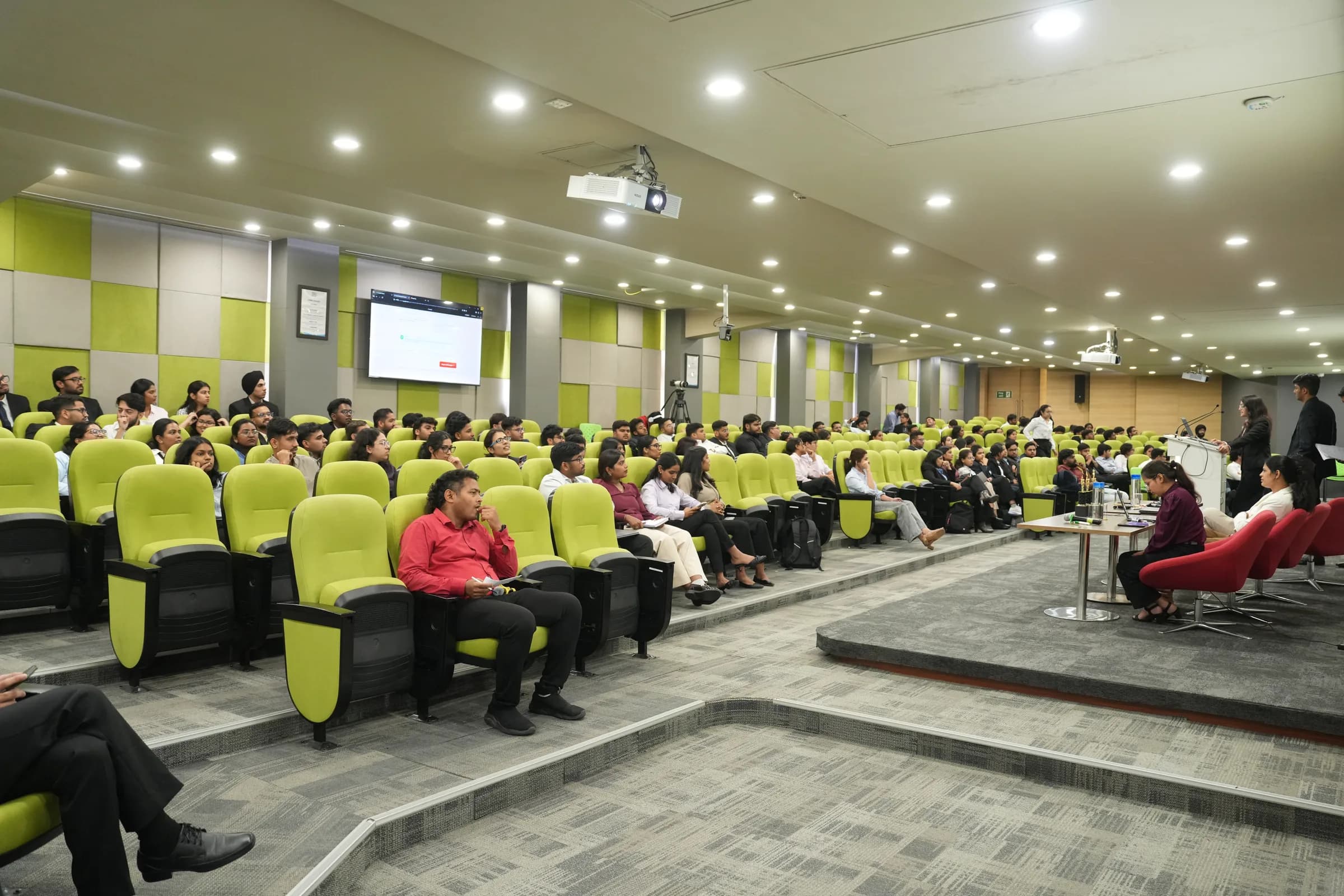
Every incoming PGPM cohort's first days are induction, not case discussion — sessions where faculty meet the class, expectations get set out loud, and a room of strangers starts becoming a cohort before the first cold call.
Day one
A full hall of new voices, before anyone has read a single case together.

Setting the room's norms before day one's first case.

Taking notes alongside the cohort I'll teach all year.
01 / Learning promise
The compressed format is not a shorter survey. It is a deliberate sequence of consequential questions, selected theory and repeated decision practice.[2][7]
Diagnose
Move between industry structure, resources, competitors and firm boundaries.
Decide
Commit under uncertainty before the room reveals a comfortable answer.
Defend
Use evidence, challenge assumptions and revise when a stronger argument appears.
Course profile
A rigorous course in gaining and sustaining competitive advantage through strategic decision-making. Internal and external analysis, classical and contemporary frameworks, cases and practical exercises connect theory to real-world choices.
02 / The 13-session arc
The V0.3 course outline moves from analyzing industries and resources, through business and corporate choices, to the organization and governance needed to execute.
Sessions 01—06
What shapes the playing field—and where can this firm create value?[1][3][5]
Cases · Tesla · Patagonia
Sessions 07—11
How should the firm compete, grow and choose its boundaries?[1][8]
Cases · Patagonia · NVIDIA · Amazon
Sessions 12—13
How do structure, culture and governance turn strategy into action?[6][8]
Cases · Amazon
03 / Complete session plan
The 13 sessions follow the PGPM 2026–27 course outline, version 0.3. Open each session for its coverage, assigned readings and lesson materials. Sessions 1–12 are 90 minutes; Session 13 is two hours.
Session 01 · 1.5 hours
Topics & coverage
Readings & references
Session 02 · 1.5 hours
Topics & coverage
Readings & references
Session 03 · 1.5 hours
Topics & coverage
Readings & references
Session 04 · 1.5 hours
Topics & coverage
Readings & references
Session 05 · 1.5 hours
Topics & coverage
Readings & references
Session 06 · 1.5 hours
Topics & coverage
Readings & references
Related lesson materials
Session 07 · 1.5 hours
Topics & coverage
Readings & references
Related lesson materials
Session 08 · 1.5 hours
Topics & coverage
Readings & references
Related lesson materials
Session 09 · 1.5 hours
Topics & coverage
Readings & references
Related lesson materials
Session 10 · 1.5 hours
Topics & coverage
Readings & references
Session 11 · 1.5 hours
Topics & coverage
Readings & references
Session 12 · 1.5 hours
Topics & coverage
Readings & references
Session 13 · 1.5 hours
Topics & coverage
Readings & references
The main lessons follow this sequence. Related lesson materials offer further practice and may retain earlier numbering. Sequence and coverage may be modified by the instructor in response to initial experience and the mid-course review.
04 / Practice system
Preparation, peer challenge and handwritten retrieval convert a case discussion into repeatable strategic practice.[2]
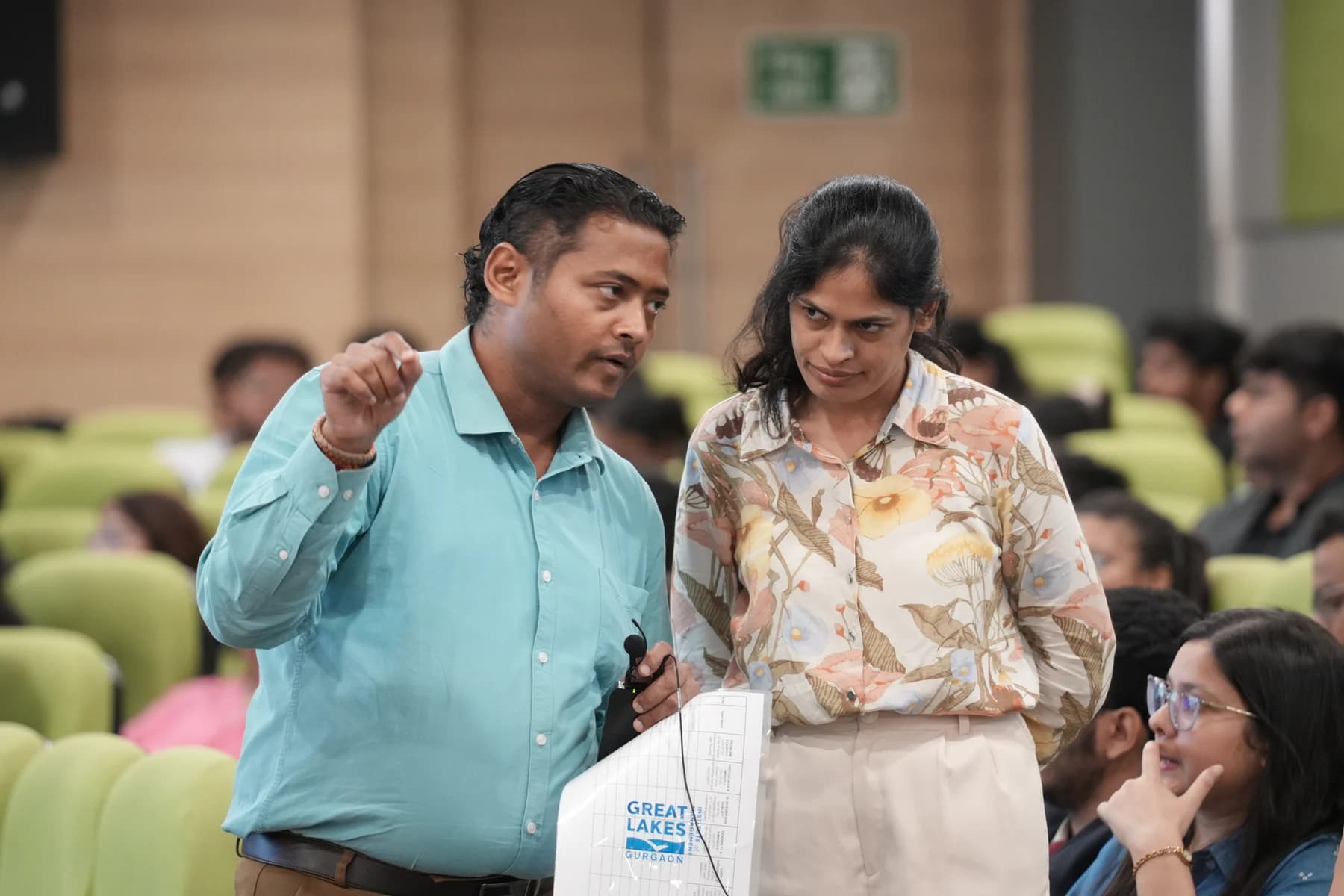
Facilitated dialogue · experience becomes a claim to examine, challenge and revise
Before
Read the case, test the numbers and arrive with a recommendation—not a summary.
In the room
Listen, challenge, compare experience and make the trade-offs visible.
Last 12 minutes
A graded quiz on the session’s ideas and case closes every class. Consistency is rewarded.
Reflection checkpoints
Learners capture what changed in their judgment—not merely what they remember. The tentative submission schedule appears below.
Teaching / learning methodology
Tentative deliverable timeline
Handwritten submission
Concepts, analysis and decisions
Report/recommendation emailed to the founder or CEO
Handwritten submission
Cumulative course assessment
The timeline is tentative and may move with the mid-course review.
05 / Signature field project
Teams connect course frameworks to a live startup decision through direct engagement with a founder, CXO or senior team member. Secondary data collection is not allowed. The work ends with a useful recommendation.
25 marks · primary fieldwork requiredSpeak live with a founder, CXO or senior team member.
Trace struggles, pivots, resources, competition and adaptation.
Translate the evidence into a defensible strategic choice.
Send the recommendation back and seek a feasibility response.
Project rubric · 25 marks
05 marks
Understand and apply concepts, tools and frameworks for strategy formulation and execution.
10 marks
Demonstrate conceptual, analytical and critical-thinking capability in the recommendation.
10 marks
Show how the startup responds to dynamic local and global challenges with foresight and alignment.
06 / Evidence of learning
Embedded questionsCO1 / PO1 · 15 | CO2 / PO2 · 10
RubricCO1 / PO1 · 5 | CO2 / PO2 · 5
Embedded questionsCO1 / PO1 · 10 | CO2 / PO2 · 5
Embedded questionsCO1 / PO1 · 10 | CO2 / PO2 · 15
RubricCO1 / PO1 · 15 | CO2 / PO2 · 10
Quizzes, reflections, examinations and field analysis show different parts of each learner's progress.[7]
07 / Capability outcomes
The official learning objectives move from conceptual understanding to diagnosis, choice and recommendation.
Explain what makes a strategy coherent and capable of producing advantage.
Connect the parts of a business so they operate in strategic harmony.
Assess risk and make choices from collected and analyzed evidence.
Read industry structure and recommend a defensible market position.
Diagnose, enhance and sustain a firm’s competitive advantage.
CO 1 · aligned to PO-1
Understand concepts, tools and frameworks for strategy formulation and execution.
CO 2 · aligned to PO-2
Demonstrate conceptual, analytical and critical-thinking capabilities for strategic decision-making.
PGPM programme outcomes
Conceptual understanding and practical application of pertinent theories to solve business and organizational problems.
Demonstrate analytic and decision-making skills.
Ethical awareness and/or socio-cultural sensitization.
Demonstrate managerial and leadership skills to achieve glocal organizational goals.
08 / Classroom standards
Preparation, presence, attribution and respectful challenge make the case method work. Open the classroom contract for the full expectations.
Preparation, active listening and participation directly determine the quality of the shared learning experience.
In the last 12 minutes of each class you sit a graded in-class quiz; consistency is rewarded.
Phones, laptops and entertainment devices remain off during class.
Attribute ideas and words rigorously; plagiarism is prohibited.
Maintain respectful discourse without interruptions, off-topic remarks or personal critiques.
Attendance is mandatory; chronic lateness and early departures are penalized.
Complete the readings; an optional one-page, non-graded case write-up may be submitted before each session using Appendix A.
Treat the classroom as a cost-free environment for experimenting, contributing and learning to play the game.
Use Appendices A–D for case analysis, article analysis, participation behaviours and the startup project.
A post-class participation card may record the case, date and contribution made.
When a peer presents, arrive with questions; presenters analyze environments, options and recommendations for long-term performance.
09 / References
The page combines the documented teaching plan with established strategy and assurance-of-learning sources.
Complete course reading canon
Core text plus all 21 reference-book and article entries in the teaching plan.
Core textbook
Frank T. Rothaermel · Strategic Management
Looking for the longer two-year strategy course?
Explore the 2-Year MBA