SSwapnil Sahoo
About
Research
  • Publications
  • Neurodiversity & Agency
  • Bricolage → Effectuation
  • Family Resourcefulness
  • Frugal Innovation
  • PhD Mandatory Coursework
    • How to Read a Research Paper
  • PhD Reach Out
Teaching
  • 1-Year MBA
  • 2-Year MBA
  • Karma Yoga
    • For B-Schools
    • For India · Mehalchauri
  • Business Simulation
  • AI Mini Hackathon
    • Side Quests · AI Viva Bot
  • Executive MDPs
Placement Assistance
  • Rigorous Industry Analysis
  • Case Study Preparation
  • Case Frameworks
  • Case Examples
  • Guesstimates
  • General Management Interviews
  • Product Management Interview Prep
  • Strategy & Entrepreneurship Interview Prep
  • Cracking Consulting Interviews
Entrepreneurship
  • How to Build a Startup?
    • Building a Durable Advantage
    • Raising Money Without Losing the Company
    • Finding Product-Market Fit
    • Hiring Your First Five People
    • Pitching and Storytelling
  • The Entrepreneurship Shelf
Press & Media
More
  • Gallery
  • Writing
  • Spirituality
    • Bhagavad Gita · Complete Text
    • Ramcharitmanas · Bālakāṇḍa
    • Authentic Hanuman Chalisa
    • Authentic Vishnu Sahasranama
    • Authentic Lalita Sahasranama
    • Authentic Shiva Tandava Stotram
    • Authentic Chandogya Upanishad
  • Holistic Wellbeing
    • Mental Wellbeing
  • Comics & Fiction
    • Spider-Man
    • Superman
    • He-Man
  • Mythology
    • Mahabharata (Original)
    • Ramayana (Original)
    • Immortals · 17 profiles
  • Contact

Profile

  • About
  • Press & Media
Research
  • Publications
  • Neurodiversity & Agency
  • Bricolage → Effectuation
  • Family Resourcefulness
  • Frugal Innovation
  • PhD Mandatory Coursework
    • How to Read a Research Paper
  • PhD Reach Out
Teaching
  • 1-Year MBA
  • 2-Year MBA
  • Karma Yoga
    • For B-Schools
    • For India · Mehalchauri
  • Business Simulation
  • AI Mini Hackathon
    • Side Quests · AI Viva Bot
  • Executive MDPs
Placements
  • Rigorous Industry Analysis
  • Case Study Preparation
  • Case Frameworks
  • Case Examples
  • Guesstimates
  • General Management Interviews
  • Product Management Interview Prep
  • Strategy & Entrepreneurship Interview Prep
  • Cracking Consulting Interviews
Entrepreneurship
  • How to Build a Startup?
    • Building a Durable Advantage
    • Raising Money Without Losing the Company
    • Finding Product-Market Fit
    • Hiring Your First Five People
    • Pitching and Storytelling
  • The Entrepreneurship Shelf
More
  • Gallery
  • Writing↗ (opens in a new tab)
  • Spirituality
    • Bhagavad Gita · Complete Text
    • Ramcharitmanas · Bālakāṇḍa
    • Authentic Hanuman Chalisa
    • Authentic Vishnu Sahasranama
    • Authentic Lalita Sahasranama
    • Authentic Shiva Tandava Stotram
    • Authentic Chandogya Upanishad
  • Holistic Wellbeing
    • Mental Wellbeing
  • Comics & Fiction
    • Spider-Man
    • Superman
    • He-Man
  • Mythology
    • Mahabharata (Original)
    • Ramayana (Original)
    • Immortals · 17 profiles
  • Contact

Dr. Swapnil Sahoo

Assistant Professor · Strategy · GLIM Gurgaon

Site

  • About
  • Research
  • Publications
  • PhD supervision

Elsewhere

(opens in a new tab) (opens in a new tab) (opens in a new tab) (opens in a new tab)

© 2026 Dr. Swapnil Sahoo. Except where a source or licence states otherwise.

Research, teaching and field notes.

Home/Research/PhD Mandatory Coursework
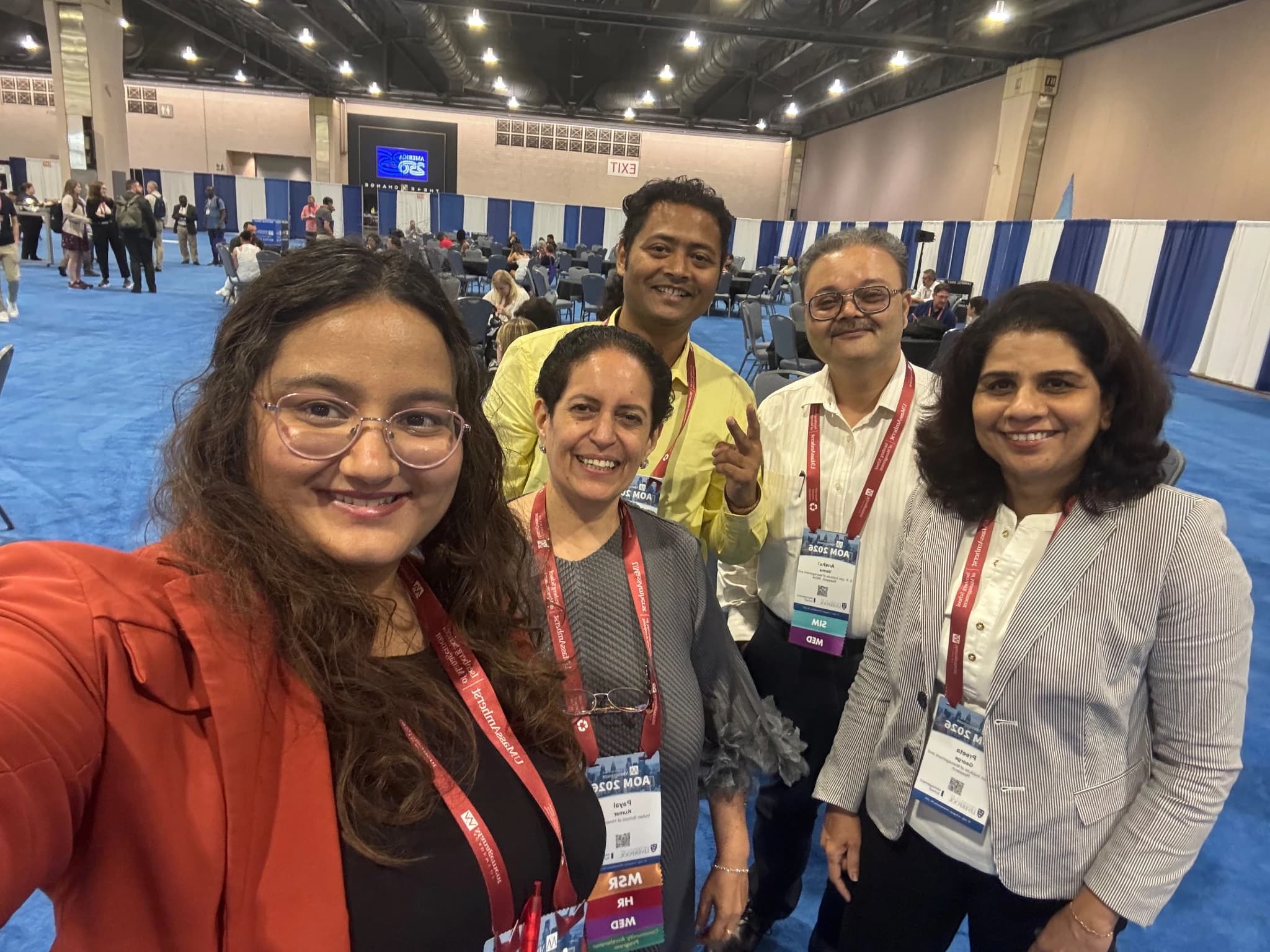
Swapnil Sahoo with fellow doctoral researchers and scholars at the Academy of Management annual meeting, AOM 2026, Philadelphia
PhD supervision

PhD mandatory coursework.

Coursework is not a formality standing between you and your dissertation — it's where the dissertation gets easier or harder, months before you've written a single chapter of it. Here's what each mandatory component is actually for, and how I use it once supervision begins.

See the four componentsHow to read a research paper

Before you treat it as a checklist

If you can already describe your topic fluently, can you also name the specific gap in the literature it fills?

  1. 01

    Which methodological camp are you weaker in — and are you actually spending coursework closing that gap, or avoiding it?

  2. 02

    Could you place a paper you've never seen onto your field's live debates within five minutes of reading its abstract?

01 / What each component is for

Four components, one purpose each.

The exact course list varies by programme and changes over time, so rather than naming specific courses, here is what each mandatory component should leave you able to do — and how to tell whether it actually did.

1

Research methodology & design

Before you can defend a research design, you need the vocabulary to argue about one: validity, reliability, causal identification, what a construct actually is versus how you're measuring it.

✓

Done well: You can read someone else's methods section and immediately spot the design choice they made and the alternative they gave up.

2

Statistical & analytical tools

Whether your work ends up qualitative, quantitative or mixed, you need enough fluency in the tools of the other camp to read their evidence critically, not just your own.

✓

Done well: You can explain, in plain language, what a specific statistical or analytical choice in a paper assumes — and what breaks if that assumption is wrong.

3

Theory seminars & literature immersion

This is where you build the mental map of your field: which debates are live, which are settled, which papers every reviewer in your area will expect you to have read.

✓

Done well: You can place a new paper you've never seen before onto that map within a few minutes of reading its abstract.

4

Comprehensive / qualifying assessment

The checkpoint exists to confirm one thing before you're allowed to commit years to a dissertation: that you can independently identify a real gap, not just describe a topic.

✓

Done well: Your written or oral answer identifies a specific, checkable gap in the literature — not a restatement of what several papers already say.

Why this page exists

Coursework is not a formality standing between you and your dissertation.

It's where the dissertation gets easier or harder, months before you've written a single chapter of it. A student who leaves coursework with a real map of the literature and a genuine methodological range proposes a sharper dissertation, defends it more calmly, and revises less painfully when a reviewer pushes back. A student who treated it as a set of boxes to check usually discovers the gap during the proposal defense instead — which is a much more expensive place to discover it.

02 / Before your first term of coursework

Four things worth doing before term one.

  1. 1

    Read the five most-cited papers in your intended area closely enough to summarise each one's actual contribution in a sentence, not just its topic.

  2. 2

    Set up a reference manager before week one — the habit of logging every paper as you read it is far easier to start early than to retrofit after a hundred PDFs have piled up.

  3. 3

    Write down, honestly, which methodological camp you're weaker in, and treat that course as the one you can least afford to coast through.

  4. 4

    Talk to at least two current or recent doctoral students about which seminars changed how they think, versus which ones they just endured.

The single highest-leverage habit on this list is the reference manager — see How to Read a Research Paper for the reading system that makes it pay off.

03 / How this connects to supervision

Coursework is where I start looking for who to supervise.

I supervise doctoral and pre-doctoral work in strategy, entrepreneurship and organisation theory. I take on only a few researchers in each cycle because close reading, candid feedback and regular conversation take time.

What I look for

  • —A research puzzle, not only a topic
  • —Methodological seriousness
  • —Reference integrity (no fabrications)
  • —Patience for revision

Our working rhythm

  • —Weekly written check-ins
  • —Theory-first, then design
  • —Co-author when warranted
  • —Honest, constructive critique

Open topics

  • —Family business resourcefulness
  • —AI in management education
  • —Frugal innovation in services
  • —Neurodiversity & capabilities

Before you send it

  • —Read two of my papers
  • —Draft a 1-page concept note
  • —State your research question crisply
  • —Tell me why now, and why me

Start with one page rather than a full proposal. Name the research puzzle, state the question clearly, explain why it matters now and tell me why my work is relevant to it.

Send a 1-page proposal

Continue reading

The one skill coursework assumes you already have.

Guide

How to Read a Research Paper

No seminar teaches this explicitly, but every seminar assumes you can already do it. The three-pass method, a reading order that isn't the printed order, and the habit that turns scattered reading into an actual literature review.

Read the guide